

Nutrition, Foraging & Traditional Uses
Season
Late summer – autumn
Habitat
Meadows, grasslands, forest edges
Edibility
Edible when young (pure white flesh inside)
Introduction
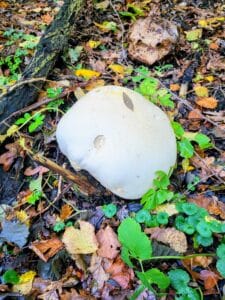
The giant puffball is one of the most spectacular wild mushrooms due to its enormous size—sometimes bigger than a soccer ball. Despite its unusual look, it is a highly prized edible mushroom when harvested at the right stage.
Identification
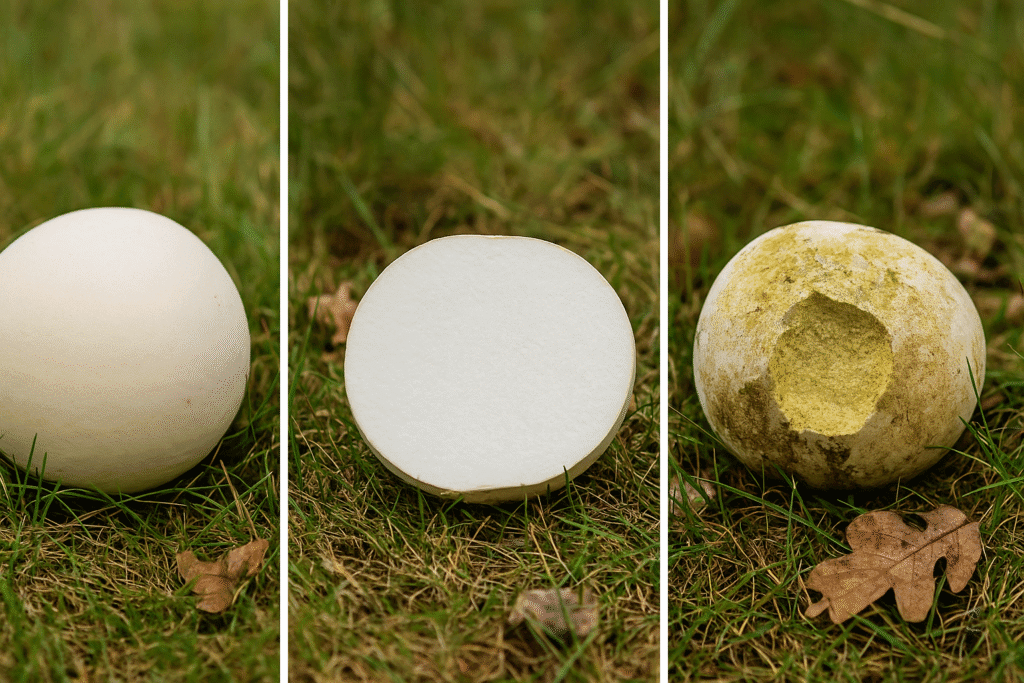
🍄 Cap/Fruitbody: Large, smooth, round ball (20–50 cm or larger), white surface.
⚪ Flesh: Solid, pure white inside when edible; turns yellow-green and spongy when overripe.
🌬️ Spores: No gills; the inside becomes powdery with age.

When to Harvest

Best time: Late summer to autumn.
Harvest only while the interior is solid white.
Discard if the flesh shows discoloration or spongy texture.

Where to Find Them
Found in nutrient-rich meadows, pastures, and grassy forest edges.Appears after rainfall, sometimes in fairy-ring-like clusters.
Health Benefits
Low in calories, high in protein and fiber.
Contains antioxidants and polysaccharides supporting immunity.
Traditionally, dried puffball powder was used to help stop bleeding from wounds.
Recipes

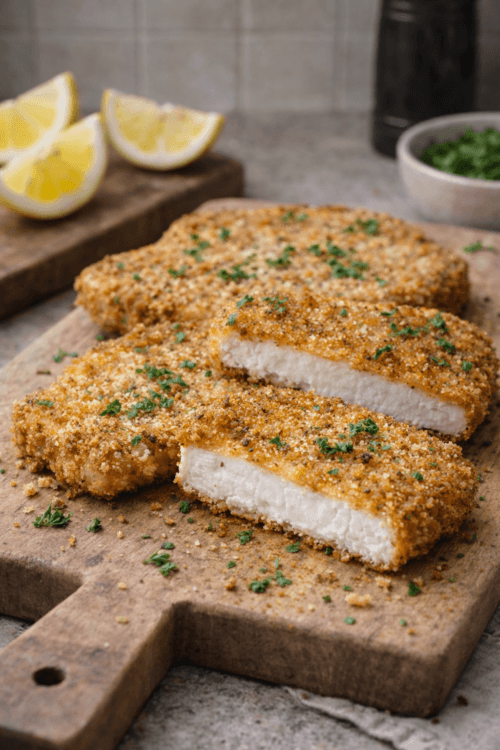
Puffball Schnitzel
thick slices breaded and pan-fried.
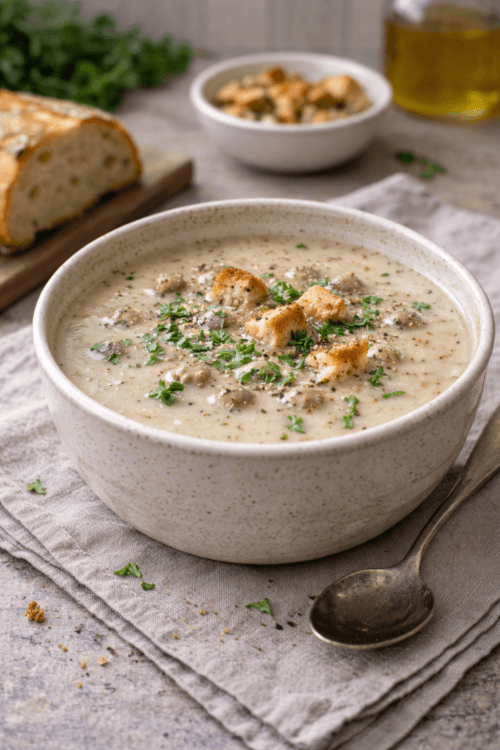
Puffball Soup
creamy autumn mushroom soup.
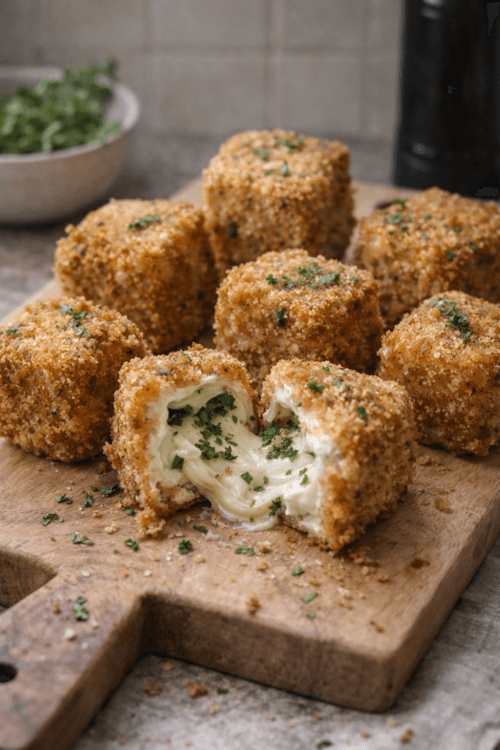
Stuffed Puffball Cubes
sautéed with garlic and herbs.
Storage Tips
Fresh ❄️
very short shelf life, 2–3 days in fridge.
Dried 🏺
less common, but can be dehydrated and powdered.
Frozen 🥶
freeze slices or cubes for later use.
Folklore & Symbolism
Seen as mystical “earth eggs” in European folklore.
Symbol of fertility, transformation, and protection.
Children often used mature puffballs as “smoke bombs” when spores puffed out.