An evergreen Mediterranean shrub with narrow aromatic leaves, woody stems and small blue, violet, pink or white flowers.
Rosemary is best known as a culinary herb, but its leaves and flowering shoots also have a long history in traditional household and herbal preparations.
Fresh leaves: throughout the year
Tender young shoots: mainly spring to early autumn
Flowers: usually spring to early summer, with later flowering possible in mild conditions
Sunny gardens, herb beds, dry banks, coastal areas, walls, containers and other warm places with well-drained soil
Usually 50 centimetres to 1.5 metres
Mature shrubs in warm, sheltered locations may grow close to 2 metres
Creeping cultivars remain much lower
Aromatic leaves, tender young shoots and flowers
Used fresh or dried in modest culinary quantities
Rosemary is an evergreen shrub belonging to the mint family. It is native to the Mediterranean region but is now cultivated in gardens and containers throughout much of the world.
Its narrow leaves contain aromatic oils that produce the plant’s familiar pine-like, resinous and slightly camphoraceous fragrance. The flavour is concentrated, so only a small quantity is normally needed.
Rosemary thrives in sunlight and well-drained soil. Established plants tolerate dry conditions well, but they may struggle in cold, wet or waterlogged ground.
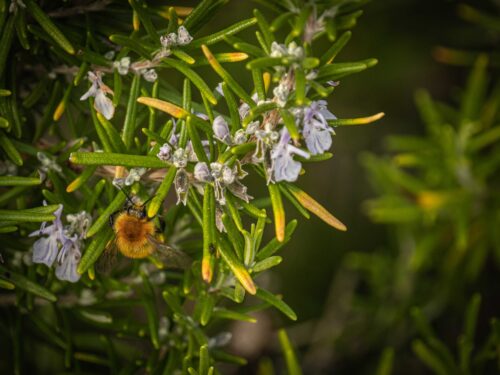
The flowers provide nectar for bees and other visiting insects. Depending on the local climate and cultivar, flowering may occur mainly in spring or continue intermittently through other parts of the year.
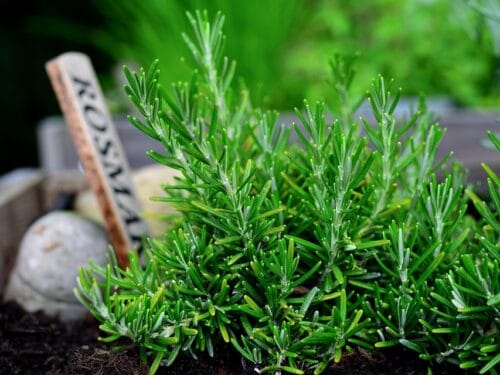
Rosemary grows as a woody evergreen shrub. Depending on the cultivar, it may be upright, rounded, spreading or trailing.
Older stems develop grey-brown bark, while young stems are green or reddish-brown and may be finely hairy.
The narrow, firm leaves grow in opposite pairs. Their upper surfaces are dark green, while the undersides appear grey-white because they are covered with fine hairs. The leaf edges curl downwards.
When crushed, the leaves release a strong resinous, pine-like and slightly camphoraceous aroma.
The small two-lipped flowers grow around the upper stems. They are usually blue or violet but may also be pale purple, pink or white.
Use several characteristics together:
Evergreen woody growth
Opposite pairs of narrow leaves
Dark green upper leaf surfaces
Pale, finely hairy undersides
Downward-curving leaf margins
A strong resinous aroma
Small two-lipped flowers
Square or slightly angular young stems
Do not identify an unknown plant from its aroma alone.
Lavender is another aromatic member of the mint family and may grow in similar dry, sunny locations.
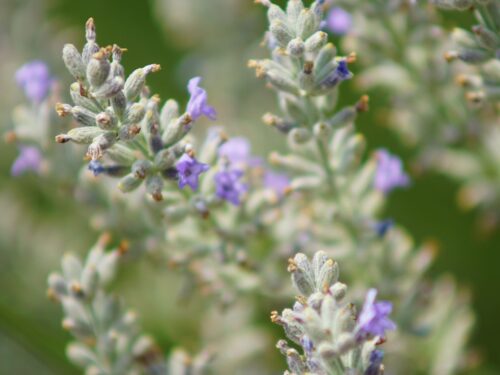
Its leaves are usually grey-green or silvery and are often covered with fine hairs on both surfaces. The flowers grow on distinct upright spikes held above the foliage.
Rosemary normally has darker green leaves with strongly pale undersides and flowers that cluster more closely around the leafy stems.
Correctly identified culinary lavender has separate culinary uses, but not every ornamental lavender is grown or treated as a food plant.
Curry plant is a small aromatic shrub with narrow silvery leaves.
Its foliage smells strongly of curry seasoning when rubbed. It produces clusters of small yellow, button-like flowers rather than blue or violet two-lipped flowers.
Curry plant belongs to the daisy family and should be identified separately.
Bog rosemary is not closely related to culinary rosemary.
It grows in wet, acidic bogs and has narrow evergreen leaves with rolled edges and pale undersides. Its pink, urn-shaped flowers hang in small clusters.
Bog rosemary contains toxic compounds and must not be eaten or used as a substitute for culinary rosemary.
Habitat is an important distinction: culinary rosemary prefers warm, dry, well-drained ground, while bog rosemary grows in wet peatland.
This evergreen shrub may be called wild rosemary in some regions, but it is not culinary rosemary.
It grows in bogs and wet heathland and has narrow aromatic leaves with rusty-brown hairs underneath. It produces clusters of white flowers.
The plant contains potent naturally occurring compounds and should not be collected as rosemary or used casually in food and drinks.
Always check the scientific name when a plant is sold or described as “wild rosemary”.
The leaves, tender shoots and flowers of correctly identified culinary rosemary are edible.
Rosemary has a strong resinous and slightly bitter flavour. A small amount can season an entire dish. Chop fresh leaves finely or add whole sprigs during cooking and remove them before serving.
Rosemary can be used in:
Roasted potatoes and vegetables
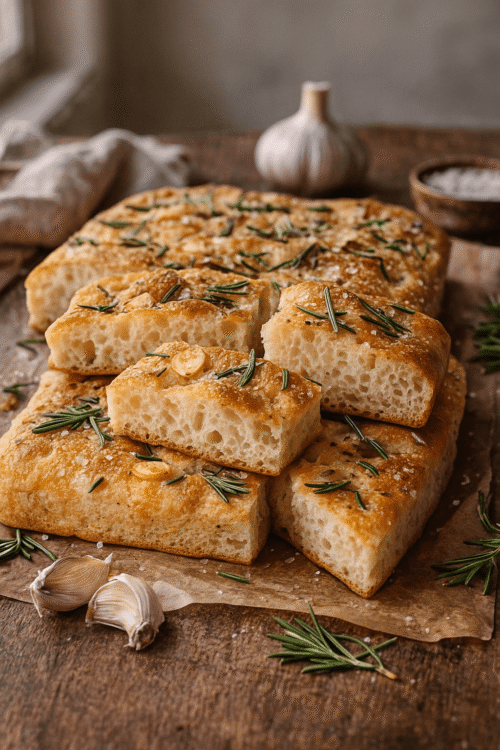
Bread, focaccia and savoury biscuits
Soups, stews and bean dishes
Meat, poultry and fish dishes
Marinades, sauces and dressings
Herb butter, salt and seasoning blends
Lemonades, syrups and infusions
Cakes, biscuits and fruit desserts
Edible flower garnishes
The flowers have a milder flavour and can be scattered over salads, breads, desserts and savoury dishes.
Fresh sprigs may be refrigerated briefly or dried in a warm, well-ventilated place. Store completely dried rosemary in an airtight container away from heat, moisture and direct sunlight.
Homemade oils made with fresh rosemary should be refrigerated and used promptly. Do not store fresh herbs in oil at room temperature.
Use only rosemary that has been confidently identified as culinary rosemary.
Ordinary food use is different from taking concentrated extracts, tinctures, supplements or essential oil.
Rosemary essential oil is highly concentrated. It should not be swallowed, added casually to food or drinks or applied undiluted to the skin. Keep it away from children and pets.
Large or concentrated medicinal preparations are not recommended during pregnancy or breastfeeding without appropriate guidance. This does not apply to the small amounts normally used to season food.
People with epilepsy, a history of seizures, serious liver disease or significant medication use should seek professional advice before using concentrated rosemary preparations.
Stop using rosemary if it causes skin irritation, swelling, breathing difficulty or another unexpected reaction.
Do not collect plants from sprayed gardens, contaminated ground, busy roadsides or areas regularly visited by dogs.
Harvest rosemary only from your own plant or where you have permission from the owner.
Choose healthy, unsprayed growth away from roads and other obvious sources of contamination.
Cut short young sprigs with clean scissors or secateurs rather than tearing the stems.
Take small amounts from different parts of the shrub so the plant retains its natural shape.
Do not cut deeply into old, bare wood unless the cultivar is known to regenerate successfully from it.
Avoid removing large quantities of flowering shoots. Rosemary flowers provide useful nectar for bees and other insects.
Leave enough foliage on the plant to support continued growth, especially before cold or wet weather.
Check harvested sprigs for insects, discoloured leaves and signs of disease before bringing them indoors.
Rosemary has traditionally been valued as a culinary herb, household plant and part of Mediterranean and European herbal practice.
The leaves and flowering shoots were traditionally used in:
Rosemary infusions were traditionally taken after meals and associated with digestion, appetite and warmth. External preparations were used in baths, washes and oils for tired muscles and joints.
Its fragrance also became associated with remembrance, loyalty and protection. Rosemary branches were used during weddings, funerals and seasonal ceremonies.
These preparations vary greatly in strength. A sprig used in food is not equivalent to rosemary essential oil or a concentrated medicinal extract.

Rosemary leaves contain aromatic volatile oils, polyphenols, diterpenes, flavonoids and triterpenes.
The volatile oil may contain 1,8-cineole, camphor, alpha-pinene, borneol, verbenone and limonene. The exact balance varies between plants, cultivars, seasons and growing locations.
Important non-volatile compounds include rosmarinic acid, carnosic acid and carnosol. Rosemary also contains flavonoids and triterpenes such as ursolic and oleanolic acids.
The leaves provide fibre and small amounts of minerals, but rosemary is normally eaten in small quantities and is primarily used as a flavouring herb.
Drying, heating and storage can alter its aromatic and chemical profile. Findings involving isolated compounds or concentrated extracts cannot automatically be applied to rosemary used in an ordinary meal or mild infusion.
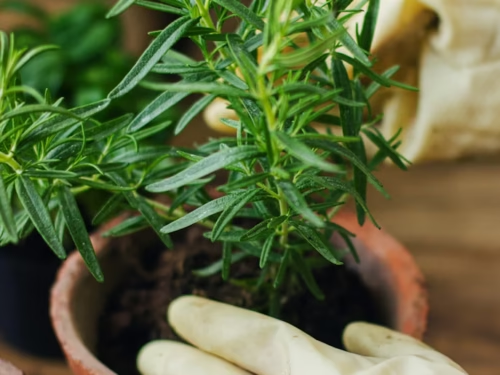
Rosemary provides aromatic leaves throughout the year, including during the colder months.
A small quantity releases an intense pine-like, resinous and slightly camphoraceous fragrance.
The leaves complement breads, vegetables, beans, savoury dishes, drinks and even certain fruits and desserts.
Its small flowers provide nectar for bees and other insects, sometimes at times when few other herbs are flowering.
Learn how to recognise and explore wild plants, fruits and trees safely.
Rosemary was formerly known botanically as Rosmarinus officinalis. It is now classified as Salvia rosmarinus, placing it within the same genus as sage.
The name rosemary is traditionally connected with the Latin words ros marinus, commonly translated as “dew of the sea”.
This refers to the plant’s Mediterranean origins and its ability to grow in dry, rocky coastal landscapes.
Rosemary has long been associated with remembrance. Branches were traditionally carried or displayed during weddings, funerals and commemorative ceremonies.
The pale underside of each leaf is covered with fine hairs. Together with the curled leaf edges, this helps the plant limit moisture loss in hot, dry conditions.