
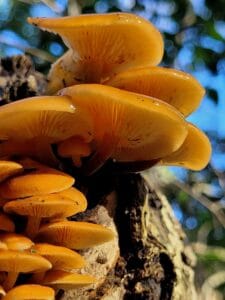
Winter Mushroom of Resilience & Brightness
Season
Late autumn to early spring, especially December–February.Thrives in frost, snow, and freezing nights
Habitat
Dead or dying hardwoods: ash, willow, elm, beech, poplar, apple Often found in clusters on stumps, logs, and fallen branches
Edibility
Edible, mild, slightly sweet, firm texture (Famously cultivated as long, pale enoki mushrooms)
Introduction
When most mushrooms have long disappeared and the forest enters deep winter sleep, Velvet Shank rises like a small miracle of warmth and light. With its glossy orange caps and soft, dark velvet stem, it’s one of the very few mushrooms that fruit in true winter conditions.
Even after frost or snow, Velvet Shank continues to grow — a symbol of resilience and quiet strength in the darkest months of the year.
In the wild, it brightens bare trees with bursts of honey-golden colour. In the kitchen, it becomes a silky, slightly sweet mushroom perfect for winter broths, garlic pan-fries, ramen bowls and warming stews.
This is a favourite for winter foragers: safe, reliable, beginner-friendly, and full of seasonal magic.
Identification
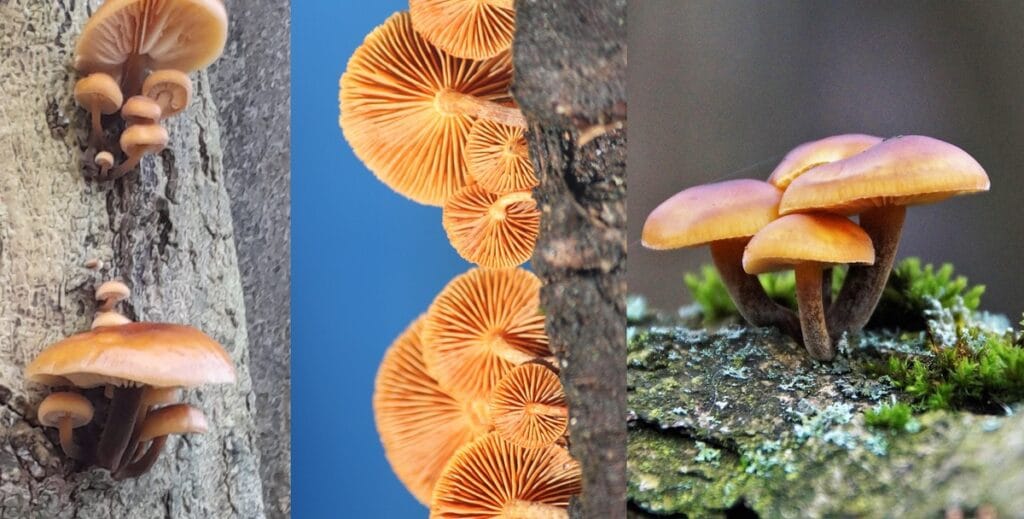
🍯 Cap: 2–8 cm. Honey-yellow to deep orange. Shiny, sticky or gelatinous when damp. Smooth, becoming slightly paler towards the edge
🖤 Stem: Distinctive: top is orange, lower half is dark brown to black and velvety. Tough, fibrous, often discarded in cooking. Grows in tight, beautiful clusters
⚪ Gills: White to pale cream. Not attached or narrowly attached to the stem
🪵 Where it grows: Directly from dead wood — never from soil. Especially common on ash, elm, willow, beech, and poplar
🧡 Smell & texture: Mild mushroom scent. Firm, slightly rubbery texture (perfect for soups)
When to Harvest
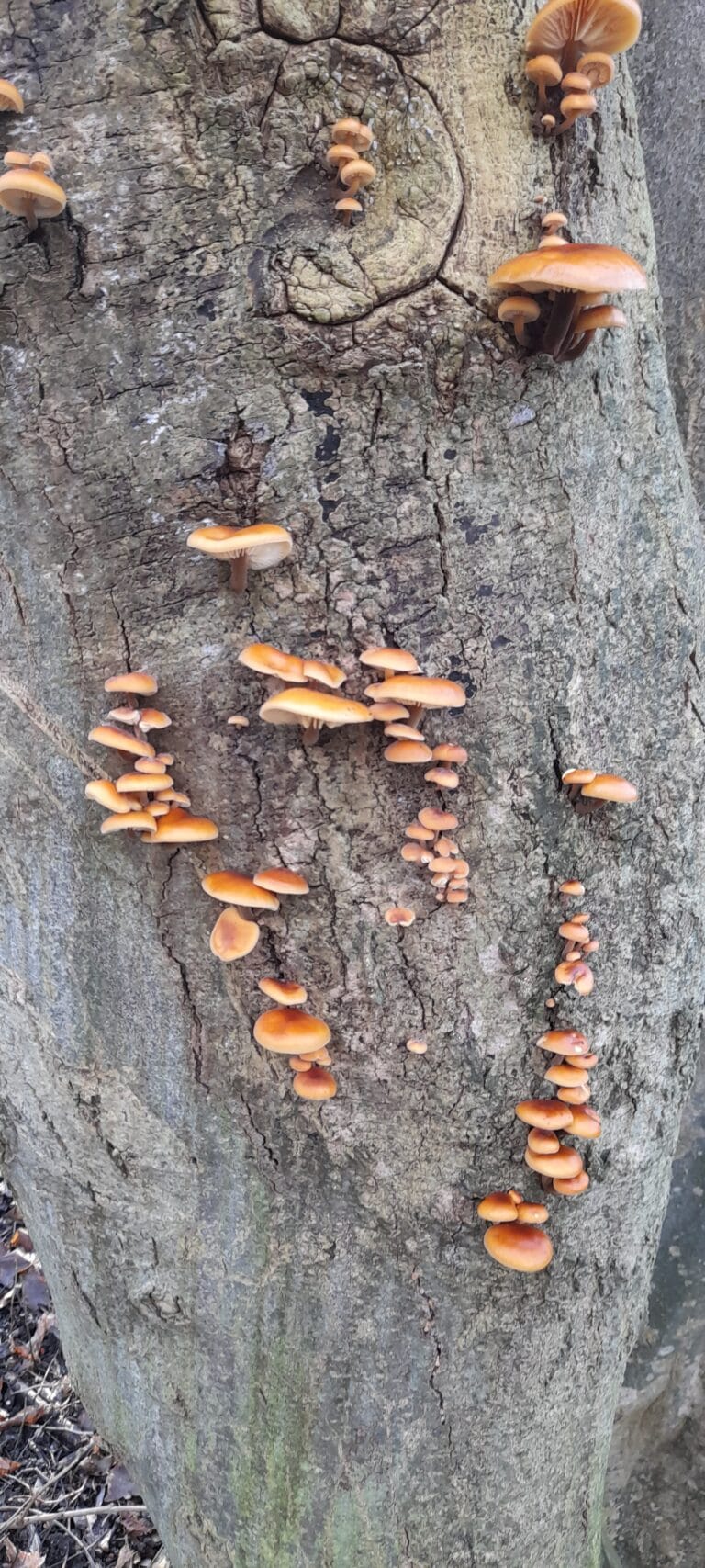
Best from November to March
Pick when caps are still firm and bright
Trim away tough stems at the base
Can be harvested even after frost — they thaw naturally and stay fresh
Choose clusters on clean, undamaged wood
Where to Find Them
Shady woodland edges.Fallen trunks and stumps.Urban parks with older trees.Riversides with willow or poplar.Garden apple trees (surprisingly common!).
Health Benefits
Velvet Shank is closely related to cultivated enoki, known for:
Immune support
Antioxidant effects
Gentle anti-inflammatory properties
Rich in B-vitamins, copper, potassium
Light, digestible mushroom ideal for winter cooking
Recipes
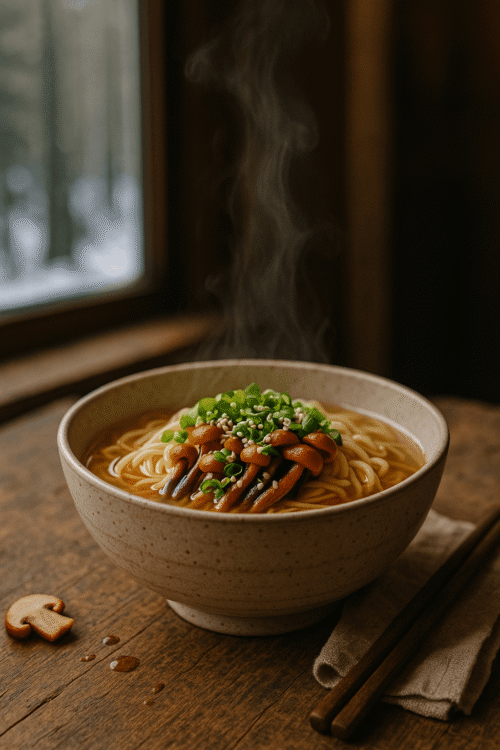
Winter Forest Ramen
A comforting bowl of noodles with sautéed Velvet Shank, miso, garlic, ginger, and broth.
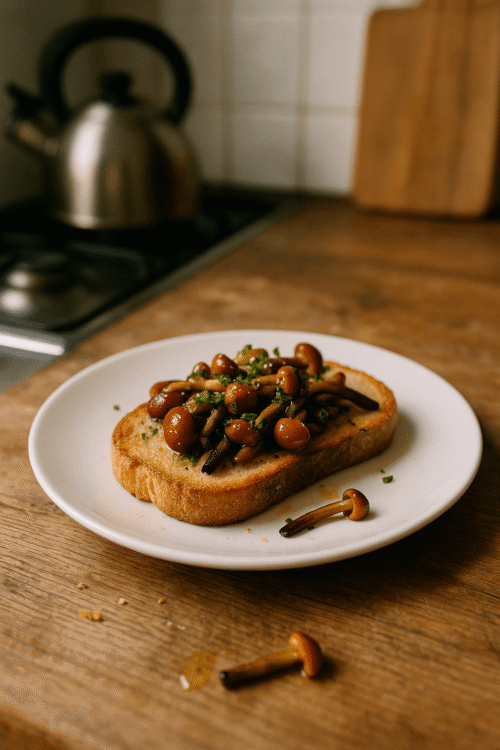
Garlic Butter Velvet Shank
Quick pan-fry with garlic, parsley, black pepper, and a squeeze of lemon. Perfect on toast or next to roasted vegetables.
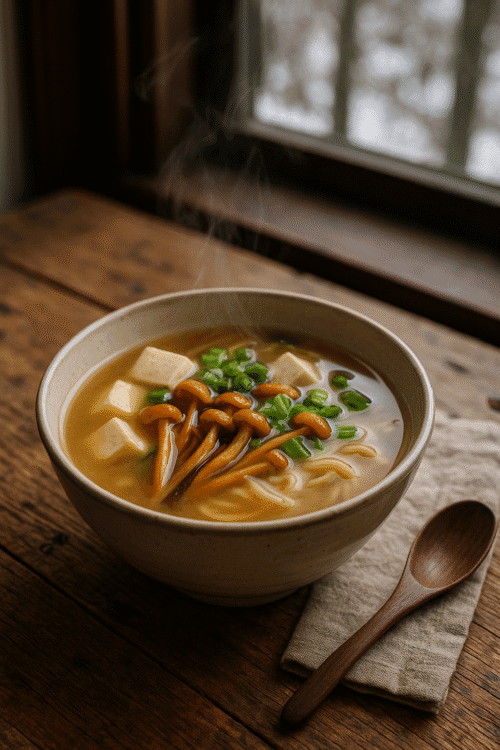
Velvet Shank Miso Soup
Soft enoki-like texture, great for soothing winter evenings.
Storage Tips
Fresh 🪴
- Keep 3–5 days in the fridge in a paper bag
- Avoid washing until use (they soak water easily)
Dried 🏺
- Can be dried, but becomes tougher
- Best used for broths and stocks
Cooked💜
- Lasts 2–3 days
- Great in meal-prep bowls
Freezed ❄️
- Blanch 1 minute → cool → freeze
- Keeps 3–6 months
Folklore & Symbolism
Velvet Shank is often seen as a firelight mushroom:
Its orange caps symbolise warmth in winter darkness
A sign of good luck and endurance when found after frost
In some traditions, it represented the sun returning after solstice
Because it fruits when everything else sleeps, many cultures saw it as a messenger of hidden life, a reminder that vitality still moves through the forest even in the coldest months.