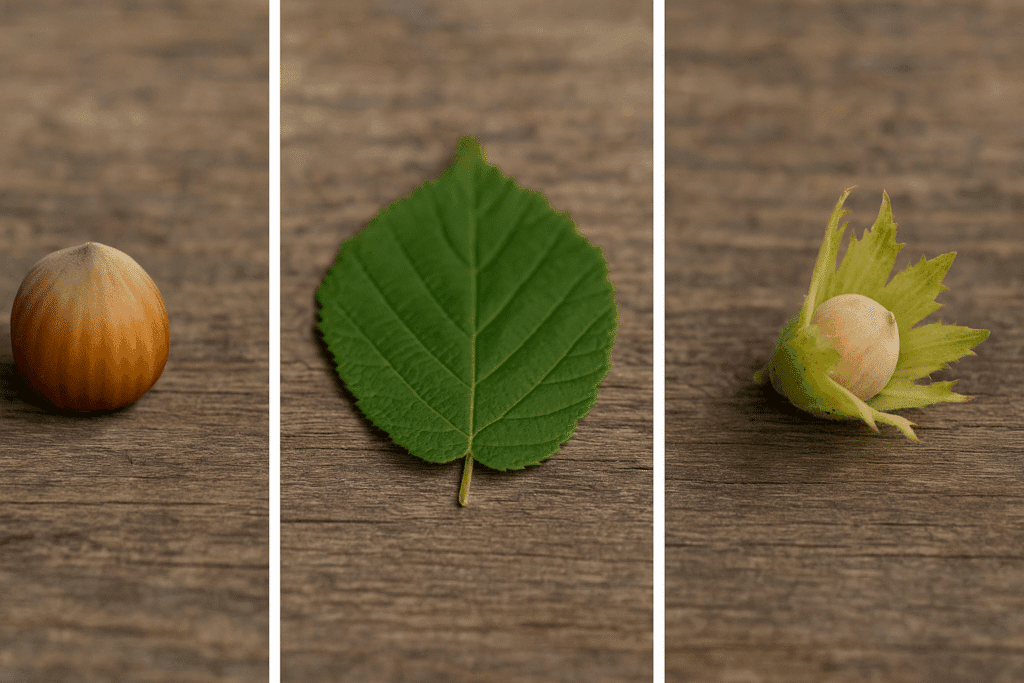
Hazelnuts are one of the most traditional wild nuts in Europe. They are rich in healthy fats, proteins, and minerals, and have been foraged for centuries as an autumn staple. Both delicious and nutritious, they are easy to identify and fun to collect in family foraging trips.
🍃 Leaves: round to oval, double-serrated edges, slightly hairy.
🌸 Flowers: yellow male catkins in late winter; small red female flowers.
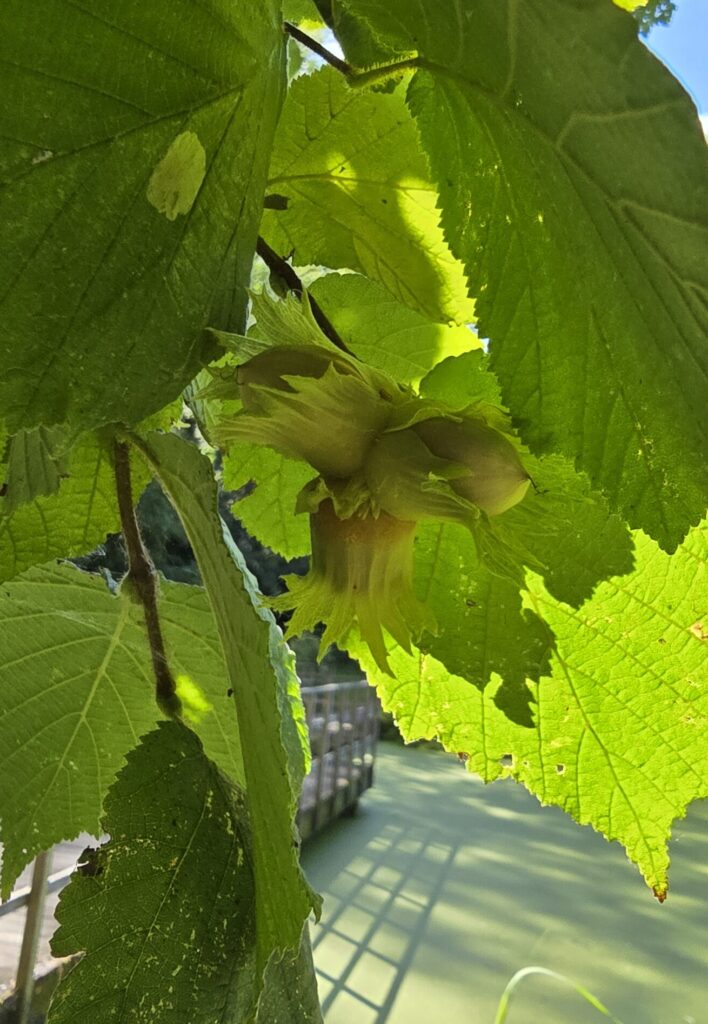
🌰 Fruits: nuts enclosed in a green, leafy husk; turn brown and drop in late summer/autumn.
Best time: September – October.
Nuts are ready when they turn brown and fall naturally from the tree.
Shake the branches → ripe nuts will fall easily.
🌳 Common in hedgerows, woodland edges, and mixed forests.
☀️ Prefer sunny, sheltered spots with fertile soil.
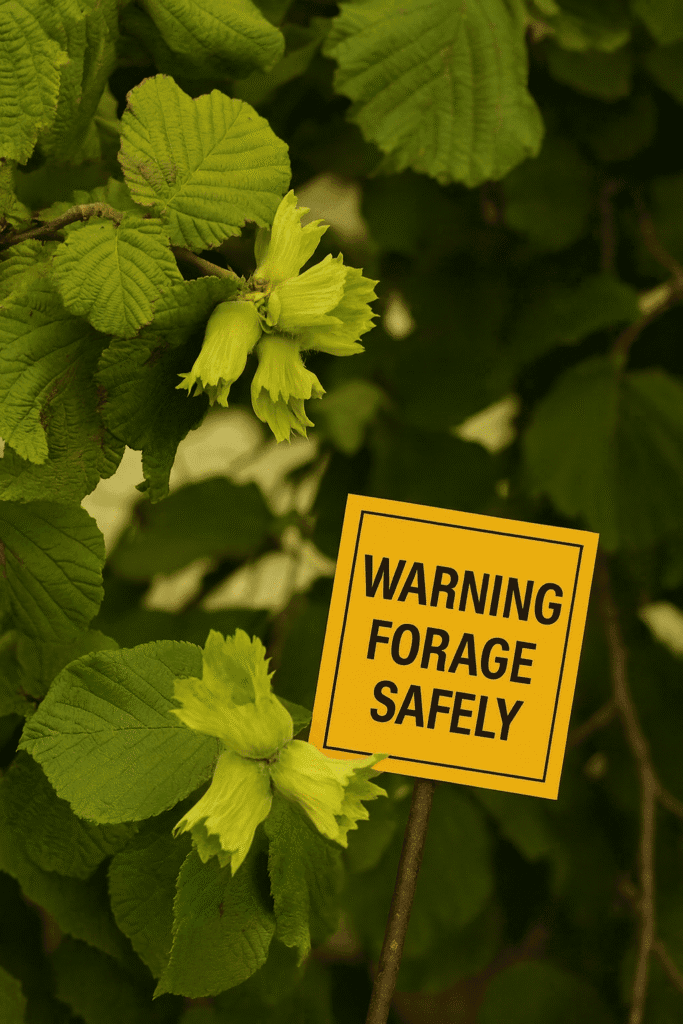
❌ Avoid collecting from polluted roadsides or sprayed fields.
✅ Collect only fallen ripe nuts – green ones are not ready.
⚠️ Watch out for competition → squirrels love hazelnuts too!
High in healthy fats & proteins → great energy source.
Rich in vitamin E, magnesium, and antioxidants.
Supports heart health and digestion.
Excellent addition to both sweet and savory dishes.
Fresh nuts: store in-shell in a cool, dry place (up to 6 months).
Shelled nuts: keep in airtight jar or freezer to prevent rancidity.
Roasted nuts: store in sealed jars, use within a few weeks.
In folklore, hazel trees symbolized wisdom, protection, and inspiration.
Druids considered hazel nuts sacred and linked them to knowledge.
In Celtic tradition, hazelnuts were believed to bring wisdom in dreams.
Hazel rods were used as dowsing sticks to find water or hidden treasures.