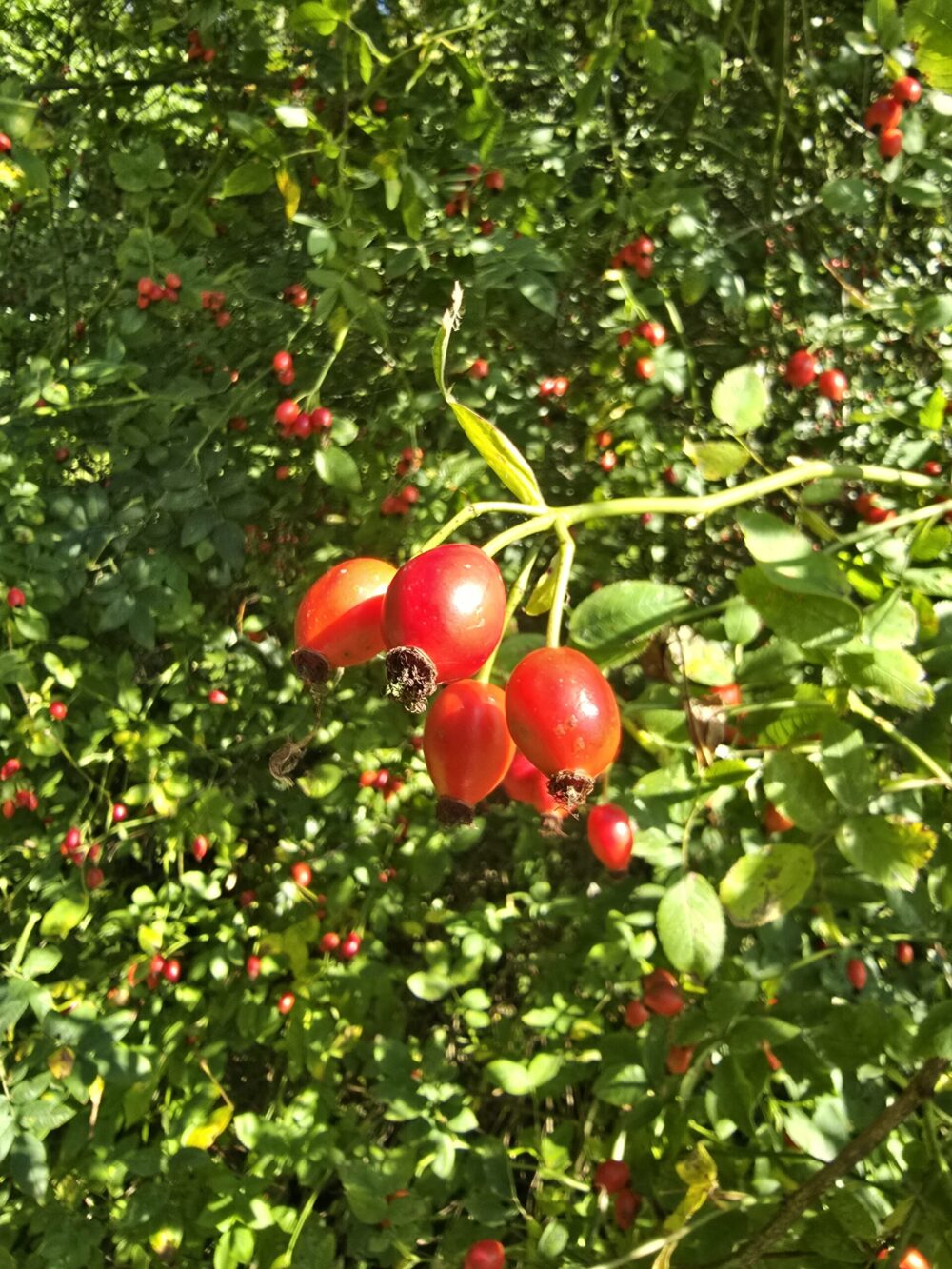
A familiar thorny hedgerow shrub or small tree with deeply lobed leaves, clusters of white spring flowers and small red autumn fruits known as haws.
Common hawthorn is widespread across much of Europe. Its ripe fruits have a mild, slightly tart and often mealy flavour. They are most commonly cooked and used in jellies, sauces, ketchups, syrups and fermented drinks.
Flowers and young leaves: spring
Ripe haws: September to November
Firm fruits may remain on the branches into winter
Hedgerows, woodland edges, scrub, field margins, embankments, parks, gardens and open countryside
Usually 3–8 metres, although mature trees may grow considerably taller
Fully ripe haws after removing or straining out the hard stones
Young leaves, flower buds and flowers have separate culinary and traditional uses
Common hawthorn belongs to the rose family and has been planted in hedgerows for centuries. Its dense growth, sharp thorns and ability to tolerate exposed conditions made it particularly useful for marking boundaries and enclosing fields.
During spring, the branches carry clusters of white or occasionally pale pink flowers. By autumn, successfully pollinated flowers have developed into small red fruits known as haws.
The flowers provide nectar and pollen for insects, while the dense branches offer nesting sites and shelter. The fruits are eaten by birds and small mammals, which help disperse the seeds.
For people, haws are best known as a seasonal hedgerow fruit. Their texture can be dry or floury when eaten raw, but cooking brings out their colour and allows them to be transformed into savoury and sweet preparations.
Common hawthorn usually grows as a densely branched shrub or small tree. Older plants may develop a short trunk and a broad, irregular crown.
The bark is grey-brown and becomes increasingly fissured, rough and knotted with age. Younger twigs are slender and usually brown, grey-brown or reddish-brown.
The branches carry sharp woody thorns. These thorns commonly emerge close to the buds and may be several centimetres long.
The leaves are arranged alternately along the twigs. They are small, green and divided into three to seven distinct lobes. The lobes are often deeply cut towards the central vein and may have toothed tips.
Young leaves are pale and tender. They become firmer and darker as the season progresses before turning yellow or orange-brown in autumn.
The flowers normally appear during late spring. They have five white or occasionally pale pink petals surrounding numerous stamens with pinkish or purple anthers.
The flowers grow in flat or slightly rounded clusters and have a strong, distinctive scent. Each flower of common hawthorn normally has a single style and stigma.
After pollination, the flowers develop into small, round or oval fruits known as haws. They begin green and ripen to orange-red, scarlet or deep red.
The fruits commonly measure around 6–10 millimetres across. A dark, dried remnant of the flower is usually visible at the end opposite the stalk.
Inside each common hawthorn fruit is usually one hard stone surrounded by a thin layer of yellowish or orange-red flesh.
Use several characteristics together: thorny woody branches, alternately arranged deeply lobed leaves, clusters of five-petalled flowers and small red fruits containing a hard stone.
Never identify an unknown red fruit by colour alone.
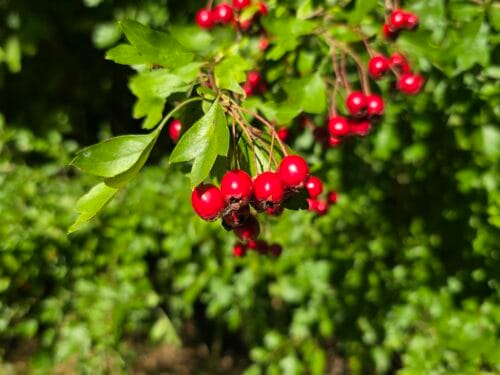
Midland hawthorn is closely related to common hawthorn and the two species can hybridise.
Its leaves are generally less deeply divided, although leaf shape can vary. The flowers normally have two or more styles, while the fruits commonly contain two stones rather than one.
Correctly identified Midland hawthorn fruits have similar culinary uses. However, distinguishing individual hawthorn species and hybrids can be difficult.
When collecting fruit, confirm that the plant is a genuine Crataegus species rather than relying on an exact species name alone.
Rowan produces dense hanging clusters of orange-red fruits that can resemble haws from a distance.
Its leaves are divided into many separate, narrow, serrated leaflets. The branches do not carry the strong woody thorns found on hawthorn.
Rowan fruits usually have a small star-shaped calyx mark and contain several seeds. They require their own identification and preparation guidance and are normally cooked before culinary use.
Wild roses produce red, orange or dark red hips during autumn.
Rosehips grow on arching stems with curved prickles rather than the short, solid woody thorns typical of hawthorn. Rose leaves are divided into separate serrated leaflets instead of being deeply lobed.
Inside a rosehip are numerous hard seeds surrounded by fine irritating hairs. A haw normally contains a single hard stone without the dense layer of itching hairs found inside rosehips.
Correctly identified rosehips are edible after suitable preparation, but they require a different processing method.
Cotoneaster and firethorn are frequently planted in gardens, parks and urban hedges. Both can produce clusters of red or orange fruits.
Cotoneaster usually has small, unlobed leaves and no true thorns. Firethorn has evergreen leaves and sharp thorns, but its leaves are not deeply lobed like those of common hawthorn.
Some species may cause digestive illness, particularly when larger quantities are eaten. Do not collect their fruits as substitutes for haws.
Holly produces bright red fruits during autumn and winter.
It is an evergreen shrub or tree with thick, glossy leaves. Many leaves have sharply spined margins, but the branches do not have the same arrangement of deeply lobed leaves and woody thorns as hawthorn.
Holly berries are not edible and may cause vomiting, diarrhoea and other symptoms.
Yew produces individual red, cup-shaped arils containing a visible dark seed.
The plant is evergreen and has flat, needle-like leaves rather than lobed broad leaves. Nearly every part of yew, including the seed inside the red aril, is highly poisonous.
Never collect red fruits from an evergreen tree unless its identity and safety are completely certain.
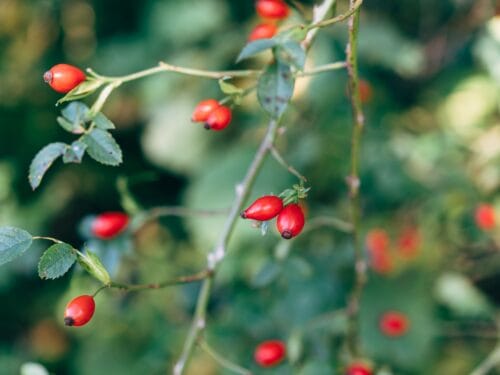
The cooked flesh of ripe haws from correctly identified common hawthorn is edible.
Raw haws are not generally considered the best way to use the fruit. They contain little flesh, have a dry or mealy texture and may cause digestive discomfort when eaten in quantity.
Cooking softens the fruit and helps release its natural colour, flavour and pectin.
Hawthorn berries can be used in:
Jellies and jams
Hawthorn ketchup
Savoury sauces
Chutneys and relishes
Syrups and cordials
Fruit leathers
Compotes
Vinegars and shrubs
Fruit wines and fermented drinks
Mixed hedgerow preserves
Dried and strained fruit preparations
Haws contain hard stones that should not be chewed, crushed or deliberately eaten.
For small quantities, the flesh can be carefully separated from the stones by hand.
For jellies, sauces and other cooked preparations, the fruits may be gently simmered whole in water. Keep the stones intact and pass the softened fruit through a suitable sieve, food mill, muslin or jelly bag afterwards.
Do not blend, grind or crush whole haws with their stones still inside.
Young hawthorn leaves, flower buds and flowers also have a history of culinary use. These should be gathered separately, in spring, and only from a confidently identified and unsprayed plant.
Avoid removing large quantities of flowers because each harvested flower reduces the later fruit crop and removes food from pollinating insects.
Only gather haws from a tree or shrub that has been confidently identified as hawthorn. Never identify an unfamiliar red fruit from colour or fruit shape alone.
The branches carry sharp thorns that can scratch the skin, catch clothing and cause eye injuries. Wear suitable clothing and take care when reaching into dense growth.
The hard stones should not be chewed, ground or eaten. Like the seeds of several other members of the rose family, they contain naturally occurring cyanogenic compounds.
When cooking haws whole, avoid breaking the stones and strain or sieve them out before the preparation is eaten.
Do not process whole haws in a blender, food processor or high-powered juicer while the stones remain inside.
Raw haws can be dry and mealy and may cause mild stomach upset, particularly when eaten in quantity. Cooked and strained preparations are generally more pleasant and practical.
Harvest only healthy fruit. Leave haws that are mouldy, blackened, shrivelled beyond use, leaking, fermented-smelling or heavily damaged by insects.
Do not collect from trees growing beside busy roads, on industrial or contaminated ground, beside polluted water, from recently sprayed hedges or directly beside heavily used dog-walking routes.
Culinary use of the fruit is different from taking concentrated hawthorn extracts, tinctures, powders or supplements.
Concentrated hawthorn products may affect the cardiovascular system and may interact with medicines used for heart conditions or blood pressure.
Anyone with a diagnosed heart condition, unexplained chest pain, breathlessness, fainting, abnormal heart rhythm or swelling of the legs should seek medical assessment rather than attempting to treat the symptoms with hawthorn.
People taking heart or blood-pressure medication should not use concentrated hawthorn preparations without guidance from an appropriately qualified healthcare professional.
The safety of concentrated hawthorn preparations during pregnancy, breastfeeding and for young children has not been adequately established.
Stop using the plant and seek medical advice if an allergic reaction, dizziness, unusual heart symptoms or another unexpected reaction occurs.
Harvest only where collecting is permitted and obtain the landowner’s permission where required.
Choose large, healthy trees or hedges growing away from obvious sources of pollution.
Take a modest quantity from several plants rather than stripping all the fruit from one tree or section of hedge.
Leave plenty of haws for birds, small mammals and other wildlife, especially during late autumn and winter when alternative food becomes scarce.
Use small scissors or secateurs where necessary. Do not snap branches or pull fruiting twigs away from the tree.
Take care around nesting birds and other animals sheltering within dense hawthorn hedges.
Avoid forcing paths through established hedges or trampling plants growing underneath them.
Do not remove large quantities of blossom during spring. The flowers provide nectar and pollen, and each flower removed prevents a later fruit from developing.
Hawthorn may be common, but old hedges and mature trees can be ecologically and culturally important. Harvesting fruit does not justify damaging the plant or its habitat.
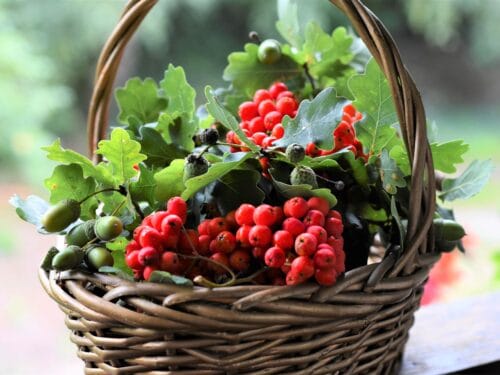
Hawthorn has traditionally been valued as a hedgerow food, boundary plant and important part of European rural herbal traditions.
The fruits were traditionally used in:
The young leaves and flower buds were sometimes eaten in spring and were known in parts of Britain as “bread and cheese”.
Hawthorn leaves, flowers and fruits also have a long history in European herbal practice. They became especially associated with the heart, circulation and emotional tension.
These uses reflect knowledge and practices passed down through generations. Although some hawthorn preparations have been studied, traditional uses should not be interpreted as proof that homemade berry preparations can prevent, treat or cure heart disease or other medical conditions.
Much of the established herbal literature and many commercial medicinal preparations use hawthorn leaf and flower, sometimes in standardised extracts. This information cannot automatically be applied to homemade preparations made only from the berries.
Hawthorn should never be used as a substitute for medical assessment or prescribed heart medication.
The plant also has a prominent place in European folklore. Its spring flowering was associated with the arrival of summer, May celebrations, fertility, protection and boundaries.
In some traditions, flowering branches were used in outdoor garlands and seasonal decorations but were considered unlucky when brought inside the home.
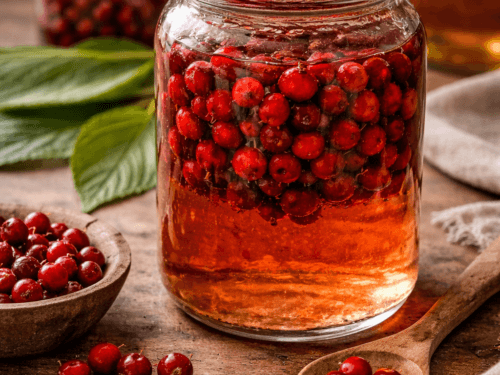
Hawthorn fruits contain naturally occurring polyphenols, including flavonoids and procyanidins.
The precise composition varies between species, individual trees, growing conditions, ripeness, storage and preparation method.
The red colour of ripe haws comes partly from carotenoids and other plant pigments.
The fruit also contains organic acids, natural sugars, pectin and dietary fibre. Its pectin content helps cooked hawthorn preparations set into jellies and thick sauces.
Vitamin C may be present, but the amount varies and can decline during storage and prolonged heating.
Hawthorn leaves and flowers have a different chemical profile from the ripe fruits. Research or traditional information concerning leaf-and-flower extracts should therefore not be automatically attributed to berry preparations.
The hard stones contain naturally occurring cyanogenic compounds and are not treated as an edible part of the fruit.
The presence of flavonoids, antioxidants or other plant compounds does not by itself demonstrate that hawthorn berries can prevent or treat cardiovascular disease or other illnesses.
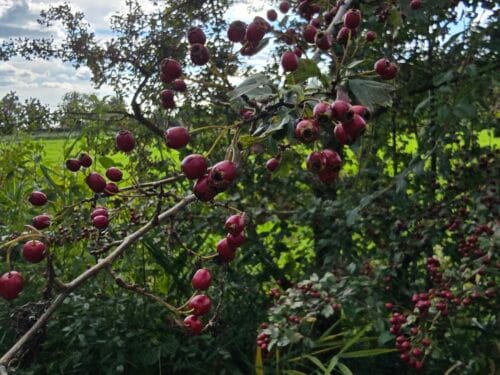
Clusters of small red fruits brighten hedgerows during autumn and early winter
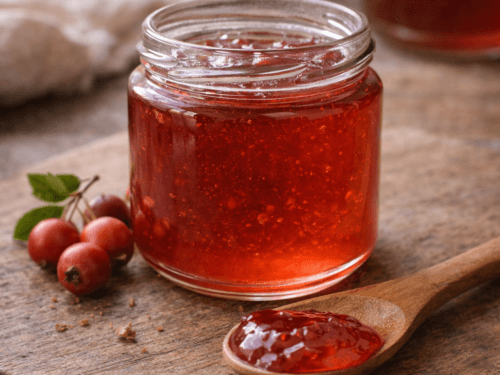
Cooked haws can be transformed into jellies, ketchups, sauces and drinks
Flowers feed pollinators while dense branches and autumn fruits support birds and mammals
Dense thorny growth has made hawthorn an important hedging and boundary plant for centuries
Learn how to recognise and explore wild plants, fruits and trees safely.
The small red fruits of hawthorn are commonly called haws.
The scientific name Crataegus monogyna refers to the single style found in the flower. The fruit also normally contains one hard stone.
This helps distinguish common hawthorn from Midland hawthorn, whose flowers usually have two or more styles and whose fruits often contain two stones.
Hawthorn has been used as a living boundary plant for centuries. Its dense branches and sharp thorns create a natural barrier while also providing food, shelter and nesting sites for wildlife.