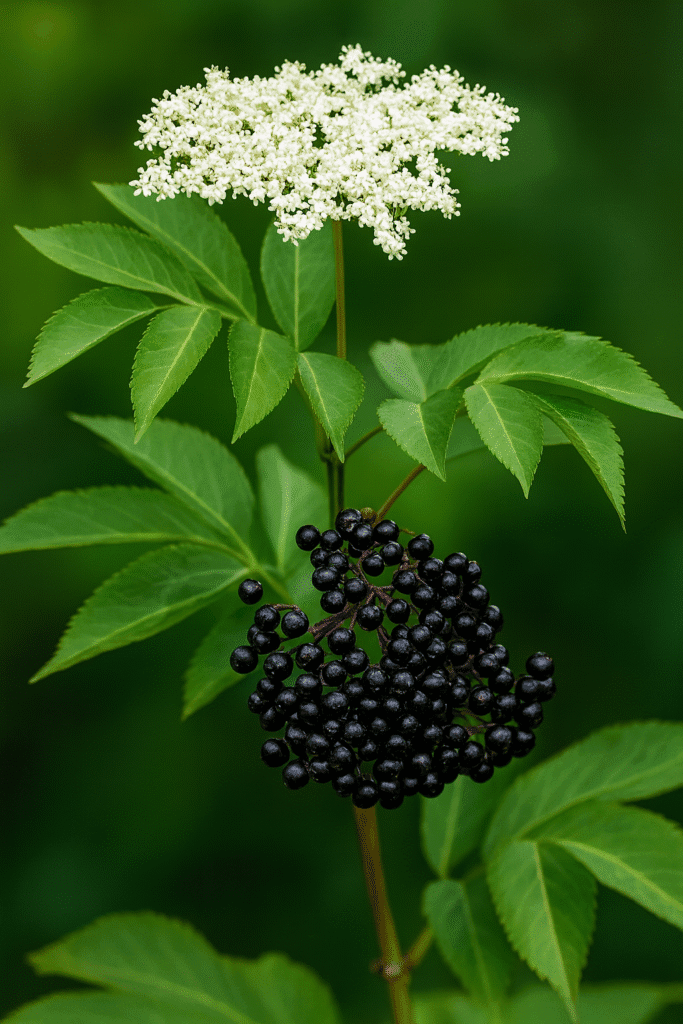
Elderberries are small, dark-purple berries known for their immune-boosting properties. For centuries they’ve been turned into syrups, wines, and remedies against colds and flu. While raw berries can upset the stomach, once cooked they transform into a delicious and medicinal powerhouse.
🌿 Leaves: Opposite, pinnate leaves with 5–7 serrated leaflets.
🌸 Flowers: Large, flat clusters of tiny, creamy-white blossoms in late spring (these become the berries).
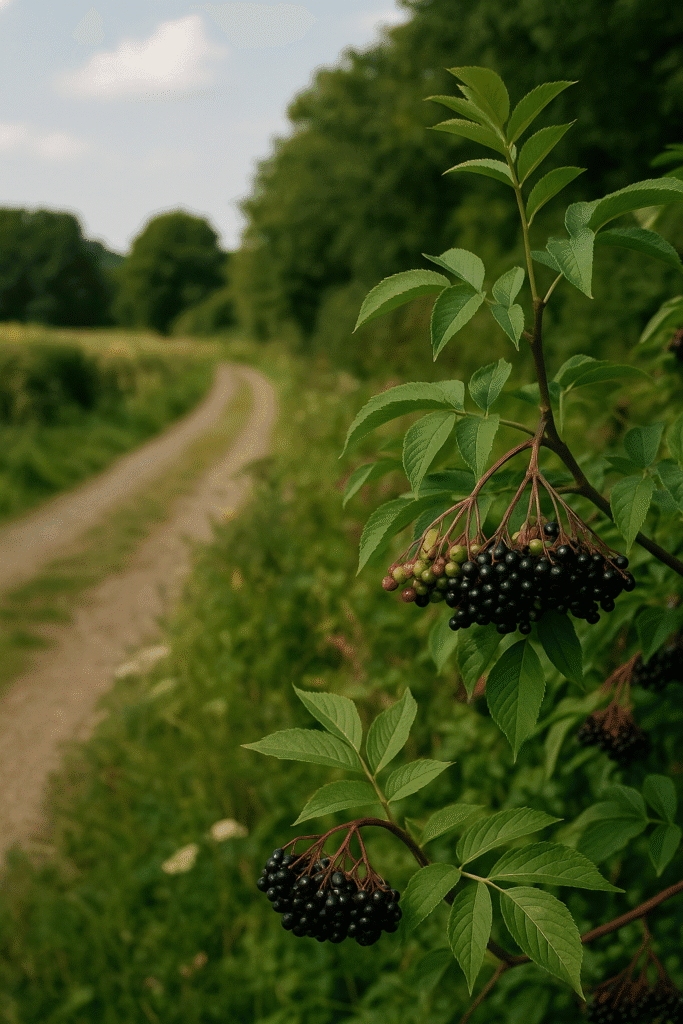
🍇 Fruits: Berries hang in heavy clusters, starting green → turning red → ripening to deep purple-black.
🌳 Elder trees often grow in:
Woodland edges and hedgerows
Roadside verges (choose safe, low-traffic areas)
Gardens and rural fields
🌞 They thrive in sunny spots but also tolerate partial shade.
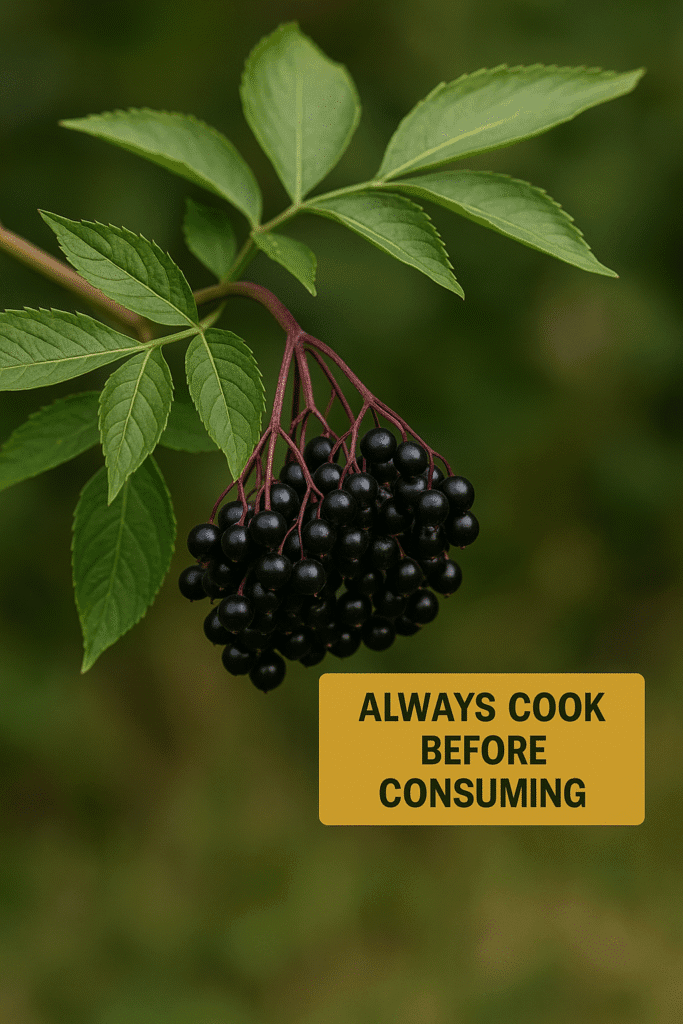
Never eat raw elderberries → they contain cyanogenic glycosides (broken down by cooking).
Always cook before eating (syrup, jam, wine).
Avoid trees near busy roads or sprayed farmland.
Harvest sustainably → leave some berries for birds and wildlife.
Rich in vitamin C and antioxidants.
Traditional remedy for colds & flu.
Supports the immune system.
Flowers (earlier in the year) can be used for teas and cordials.
Elderberry Syrup (Classic Remedy)
Simmer berries with water, ginger, cinnamon, and cloves. Strain and sweeten with honey.
Elderberry Jam
Cook with apples or pears for natural pectin and sweetness.
Elderberry Cordial / Wine
Infuse berries with sugar, water, and lemon → a sweet syrup or start fermentation for wine.
Fridge: Fresh berries keep 2–3 days.
Freezer: Strip berries from stems with a fork, spread on a tray, freeze, then store in bags.
Preserved: Syrup or jam can last months if sealed properly.
In European folklore, the elder tree was considered magical and protective.
🌙 Some believed cutting an elder without permission from the “Elder Mother” spirit would bring misfortune.
🍷 Elderberries were also used in rituals for protection, healing, and abundance.