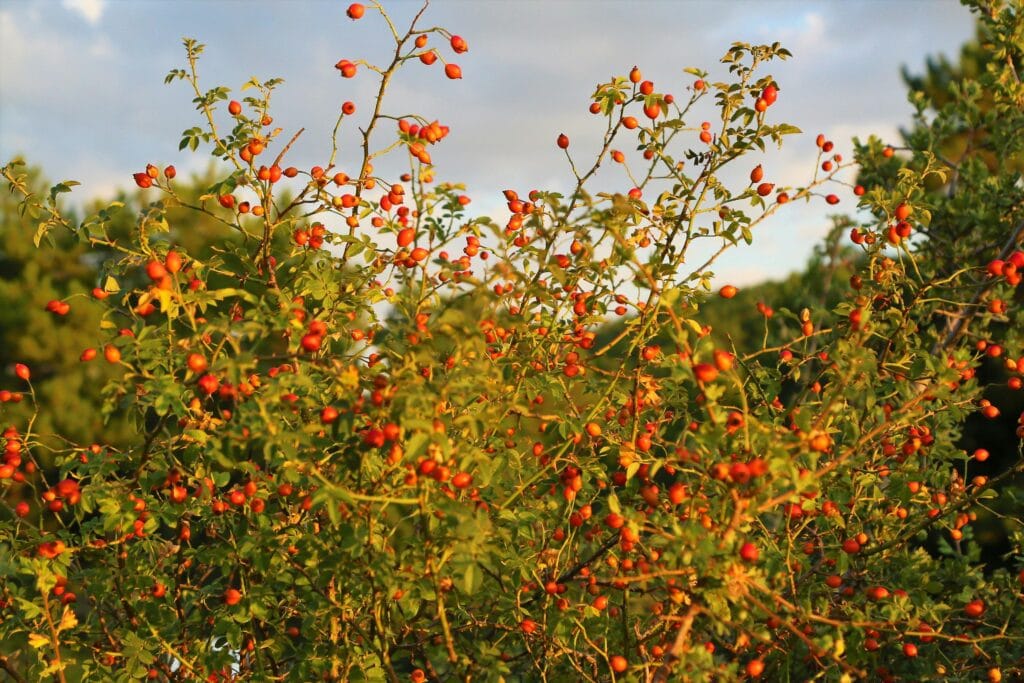
Rosehips are the bright red fruits of the wild dog rose. They have been valued for centuries as one of nature’s richest sources of vitamin C. Hardy and resilient, they shine in late summer through winter, offering nutrition and natural remedies.
2. How to Identify Them
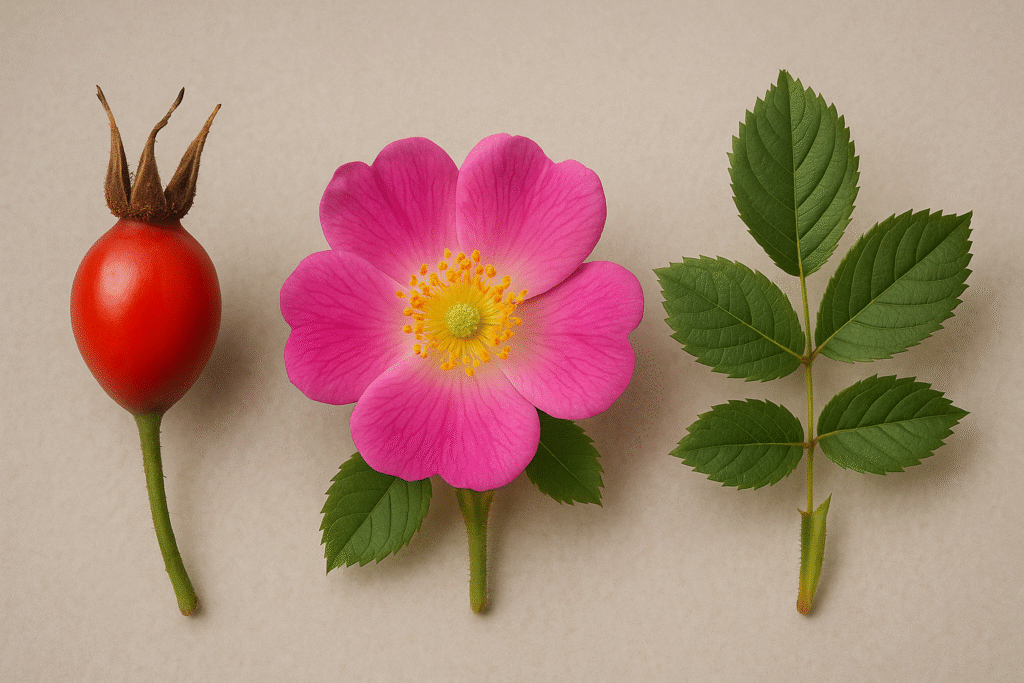
🍃 Leaves: pinnate with 5–7 oval leaflets, serrated edges. 🌸 Flowers: pale pink to white, blooming in May–June. 🍒 Fruits: oval to round, bright red/orange hips in late summer to autumn.
3. When to Harvest
Best time: September – November, ideally after the first frost (hips turn sweeter).
Pick firm, bright red hips without black spots.
Wear gloves — bushes are very thorny!
4. Where to Find Them
🌳 Common along hedgerows, woodland edges, ditches, and old gardens. ☀️ They thrive in sunny, open spots with well-drained soil.
5. Foraging Safety 🚫
❌ Avoid hips near busy roads or sprayed fields. ✅ Always wash thoroughly before use. ⚠️ Remove the hairy seeds inside before eating — they can irritate the throat.
6. Health Benefits 🍃
Extremely high in vitamin C (immune support).
Rich in antioxidants → protect cells from oxidative stress.
Traditionally used for colds, flu, and joint support.
Rosehip tea helps digestion and eases inflammation.