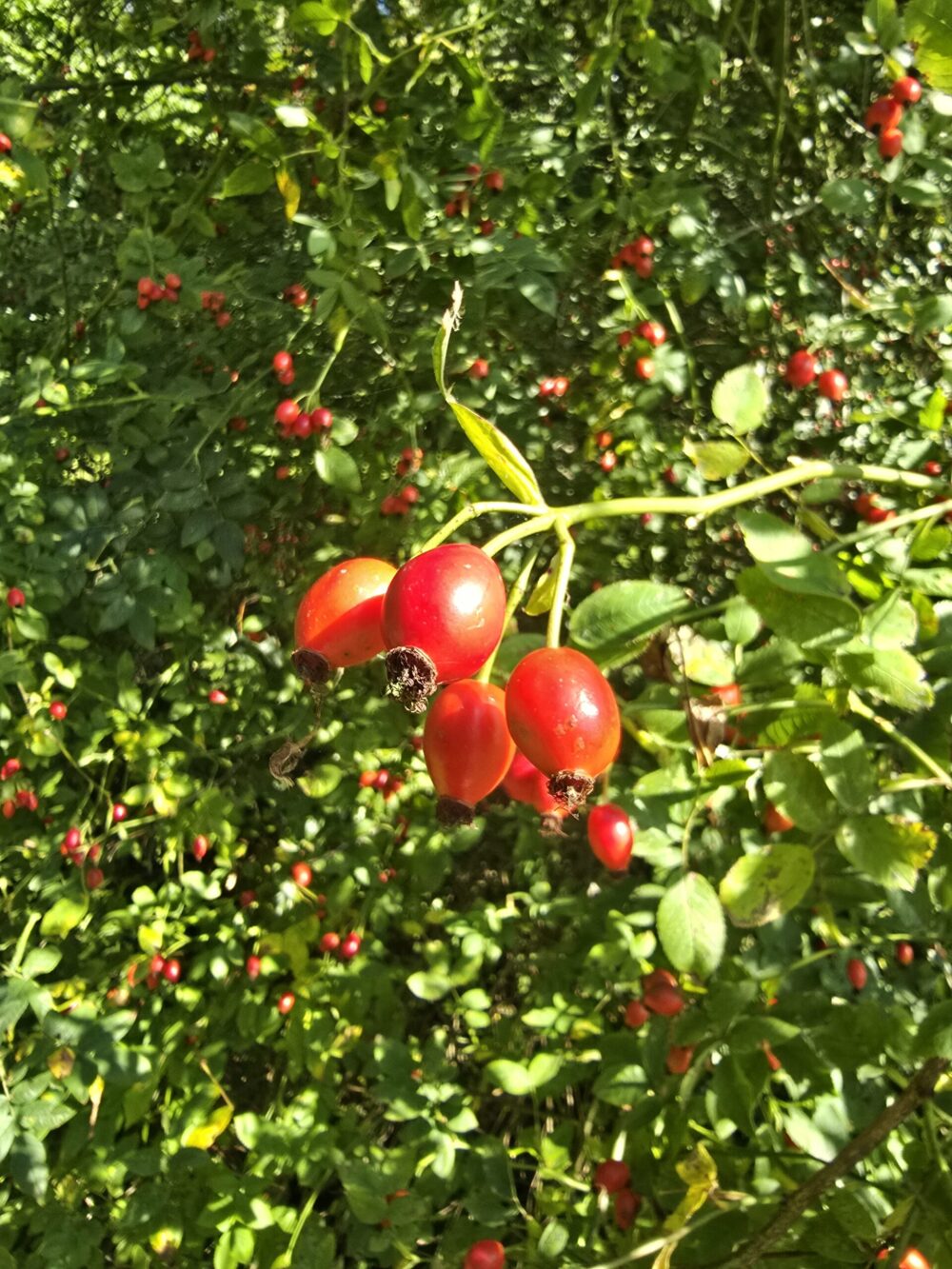
A widespread group of prickly brambles with arching canes, serrated leaves, white or pink flowers and dark aggregate fruits made up of many small drupelets.
Blackberries are among the most familiar wild fruits in Europe. The ripe fruits can be eaten fresh or used in jams, syrups, desserts, drinks and savoury recipes. Young leaves also have a history of traditional use in infusions.
Young leaves: spring to early summer
Flowers: late spring to summer
Ripe fruits: July to October, usually most abundant in August and September
Hedgerows, woodland edges, scrub, field margins, railway banks, paths, gardens, parks and disturbed ground
Brambles commonly form thickets around 1–3 metres high, although individual canes may grow several metres long
Fully ripe fruits and young healthy leaves — only after certain identification
Blackberries grow on perennial brambles belonging to the rose family. In Europe, wild blackberries include many closely related species, hybrids and local forms that can be extremely difficult to distinguish from one another.
For this reason, they are often described collectively as the Rubus fruticosus aggregate rather than treated as one easily recognisable species.
Blackberry brambles produce long canes that may arch, scramble through other vegetation or root where their tips touch the ground. Dense patches provide food and shelter for insects, birds and other wildlife.
The flowers supply nectar and pollen, while the ripe fruits are eaten by many animals. Birds and mammals help spread the seeds through the surrounding landscape.
For people, blackberries are a versatile seasonal food. Their flavour ranges from pleasantly tart to rich and sweet, depending on the plant, growing conditions and stage of ripeness.
Blackberries grow on long, arching or scrambling canes that often form dense, tangled thickets.
The canes may be green, reddish, purple-brown or greyish depending on their age and exposure to sunlight. Most wild brambles have sharp prickles, although their size, shape and number vary between different members of the group.
Young canes generally concentrate on vegetative growth. Side branches carrying flowers and fruits usually develop on older canes.
The leaves are arranged alternately along the stems. Each leaf is normally divided into three or five serrated leaflets. The upper surface is usually green, while the underside may be paler and sometimes softly hairy.
Small curved prickles may occur on the leaf stalks and along the central veins.
The flowers usually appear from late spring through summer. They have five white or pale pink petals surrounding numerous stamens and grow singly or in branched clusters.
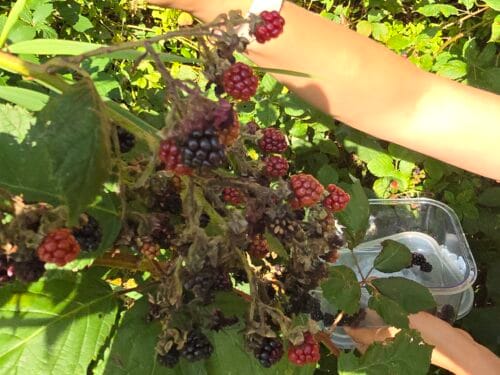
The fruits begin green, then turn red before ripening to deep purple or black. Each blackberry consists of many small fleshy sections called drupelets.
When a ripe blackberry is picked, the soft central receptacle remains inside the fruit. This gives a blackberry a solid centre, unlike a raspberry, which normally becomes hollow when picked.
A fully ripe blackberry should be dark, plump and easy to remove from the plant. Colour alone is not always sufficient: some fruits turn black before they have developed their best flavour and texture.
Use several characteristics together: arching prickly canes, alternate leaves with three or five serrated leaflets, five-petalled flowers and aggregate fruits composed of many drupelets.
Never identify an unknown fruit only by its dark colour.
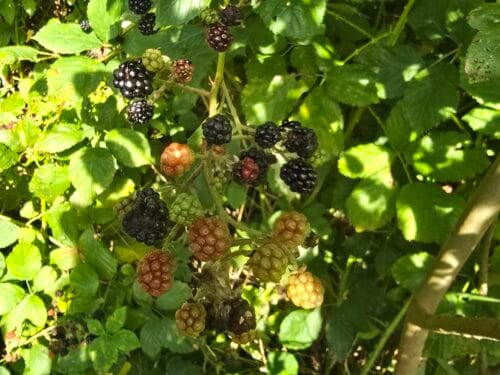
Wild raspberry belongs to the same genus and has similar prickly canes, divided leaves, five-petalled flowers and aggregate fruits.
Raspberry leaves are often noticeably pale or silvery-white underneath. Its ripe fruits are usually red, although cultivated and less common wild forms may have other colours.
The clearest difference can be seen when the fruit is picked. A ripe raspberry separates from its central receptacle and is hollow inside. With a blackberry, the receptacle remains attached and the picked fruit has a solid pale centre.
Correctly identified raspberries are edible.
Dewberry is another closely related member of the genus Rubus.
It usually has low, trailing stems and often grows in open, damp or disturbed places. The fruits commonly consist of fewer, larger drupelets and may have a blue-black colour covered with a pale waxy bloom.
Correctly identified dewberries are edible, although their appearance and flavour differ from common blackberries.
Europe contains many blackberry species, hybrids and local forms. Their stems, prickles, leaf undersides, flowers and fruits can vary considerably.
Distinguishing every microspecies is a specialist task. For ordinary culinary harvesting, it is more important to confirm that the plant is a fruit-bearing Rubus bramble than to assign it an exact microspecies name.
Many unrelated plants produce dark purple or black fruits. Some are inedible or poisonous.
Deadly nightshade, for example, produces individual glossy black berries rather than aggregate fruits made from many drupelets. It is a non-prickly herbaceous plant with undivided leaves and purple-brown bell-shaped flowers.
Check the complete plant, including its stems, prickles, leaves, flowers and fruit structure. If the fruit is not clearly composed of many joined drupelets on a typical Rubus bramble, do not eat it.
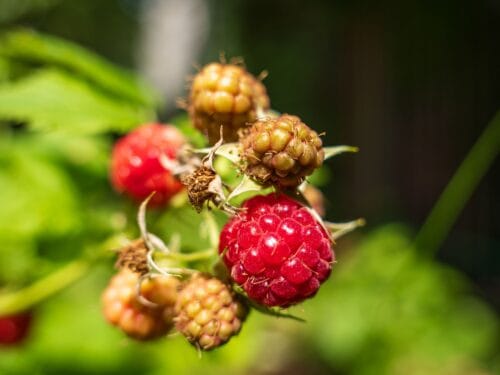
The fully ripe fruits of correctly identified blackberry brambles are edible.
Blackberries can be sweet, tart or slightly earthy. Their flavour varies between individual plants, so neighbouring brambles may produce noticeably different fruits.
Blackberries are commonly used in:
Fresh fruit dishes
Jams and jellies
Compotes and sauces
Pies, crumbles and cakes
Syrups and cordials
Smoothies and frozen desserts
Vinegars and shrubs
Chutneys and savoury sauces
Fermented drinks
Dried fruit preparations
Young blackberry leaves also have a history of use in herbal infusions. Select only clean, healthy young leaves and use them in modest quantities.
Flowers are not normally worth gathering because they are valuable to pollinators and each harvested flower removes the possibility of a later fruit.
Do not use the roots as a casual food ingredient.
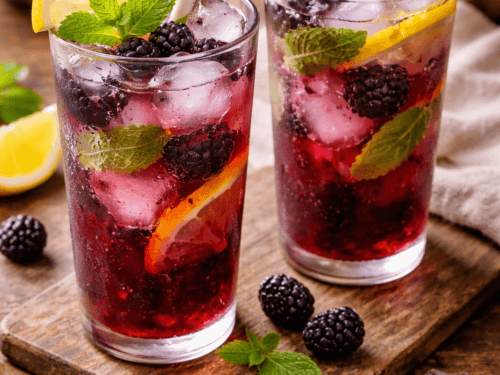
Only harvest fruits from a bramble that has been identified with certainty. Never identify an unknown berry by colour alone.
Blackberry canes have sharp prickles that can scratch skin, catch clothing and injure the eyes. Wear suitable clothing and use care when reaching into dense growth.
Pick only healthy fruits. Leave berries that are mouldy, leaking, unusually discoloured, fermented-smelling or heavily damaged by insects.
Inspect the fruit carefully before eating or preserving it. Small insects may hide between the drupelets.
Wash the fruits gently in clean water before use. Blackberries are fragile and spoil quickly, so refrigerate or process them soon after harvesting.
Do not harvest from plants growing beside busy roads, on industrial or contaminated land, beside polluted water, in recently sprayed areas or directly beside frequently used dog-walking routes.
People can occasionally be allergic to blackberries or other plants in the rose family. Stop eating them and seek medical advice if swelling, breathing difficulties or another serious reaction occurs.
Blackberry leaves contain tannins. Strong or frequently repeated leaf preparations may cause nausea, stomach irritation or constipation in sensitive people.
The safety of concentrated medicinal preparations made from blackberry leaves or roots during pregnancy, breastfeeding and for young children has not been adequately established. Seek advice from an appropriately qualified healthcare professional before medicinal use.
Harvest only where collecting is permitted and obtain the landowner’s permission where required.
Pick a modest quantity from several large, healthy brambles rather than stripping all the fruit from one patch.
Leave plenty of ripe berries for birds, mammals, insects and other foragers.
Avoid breaking fruiting branches or cutting complete canes simply to reach the berries.
Do not remove flowers unnecessarily. They provide nectar and pollen and will develop into later fruits when successfully pollinated.
Take extra care around nesting birds and other wildlife sheltering within dense bramble patches.
Avoid trampling surrounding plants or forcing paths through undisturbed vegetation.
Blackberry brambles can spread vigorously, but they remain an important part of hedgerows and woodland-edge habitats. Harvesting fruit does not justify damaging or removing the entire plant.
Blackberries have traditionally been valued as an abundant late-summer food and as part of European rural herbal traditions.
The fruits and young leaves were traditionally used in:
Ripe blackberries were eaten fresh or preserved for the colder months. Young leaves were dried and brewed as an astringent infusion, while stronger preparations were sometimes used historically as mouth rinses or gargles.
Blackberry leaves were traditionally associated with digestive complaints, sore throats and irritated mouths. These uses reflect knowledge and practices passed down through generations. Although not every historical application has been confirmed by modern clinical research, this heritage remains an important part of understanding how the plant was valued and used.
Because blackberry leaves contain tannins, strong, concentrated or frequently repeated preparations are not recommended without guidance from an appropriately qualified herbal or healthcare professional.
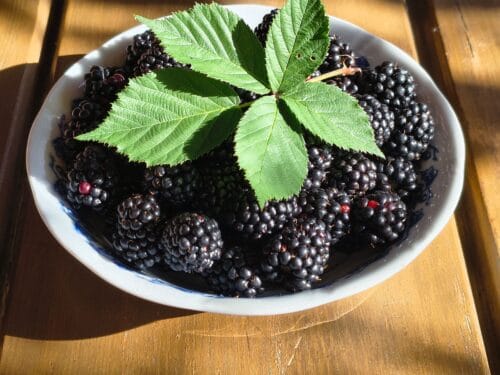
Blackberries contain naturally occurring pigments called anthocyanins, which contribute to the dark purple or black colour of the ripe fruits.
The fruits also contain other polyphenols, including flavonoids and ellagitannins. Their exact amounts vary depending on the bramble, growing conditions, ripeness, storage and preparation method.
Blackberries provide dietary fibre and contain vitamin C and other micronutrients. The amounts present vary and may be reduced during prolonged storage or processing.
The seeds contain small quantities of naturally occurring oils and contribute to the fruit’s fibre content and texture.
Blackberry leaves contain tannins and other phenolic compounds. Tannins create the dry, astringent sensation associated with strong leaf infusions.
The presence of antioxidants or other plant compounds does not by itself demonstrate that blackberries or blackberry-leaf preparations can prevent or treat disease.
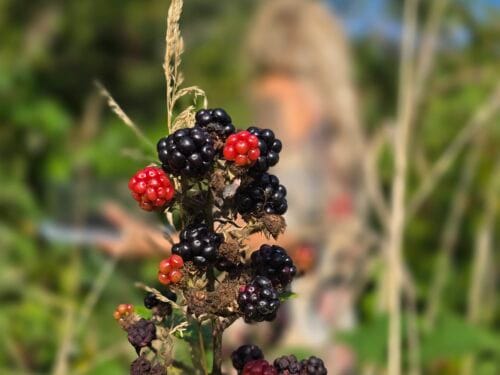
Each blackberry is formed from many small, juicy drupelets
Long prickly stems arch and scramble through hedges and surrounding vegetation
Flowers feed pollinators while the fruits provide food for birds and mammals
Established bramble patches can produce generous harvests in late summer and autumn
Learn how to recognise and explore wild plants, fruits and trees safely.
A blackberry is not a true botanical berry.
Each fruit is made from many small sections called drupelets. Every drupelet develops from a separate ovary within a single flower.
When a blackberry is picked, the central receptacle remains inside the fruit. This is why the fruit has a solid centre.
A raspberry separates from its receptacle when picked, leaving the familiar hollow space inside the fruit.