
Nutrition, Foraging & Traditional Uses
Season
September – November
Habitat
Cultivated groves, old orchards, sunny forest edges
Edibility
Highly nutritious nut, widely eaten
Introduction
Walnuts are one of the oldest cultivated nuts in the world. Known for their brain-like shape, they have long been associated with wisdom and vitality. These nuts are rich in healthy fats, protein, and minerals, and have been treasured in both kitchens and folk medicine for centuries.
Identification
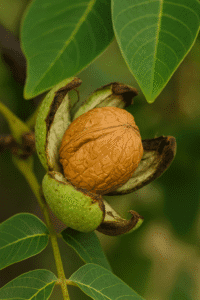
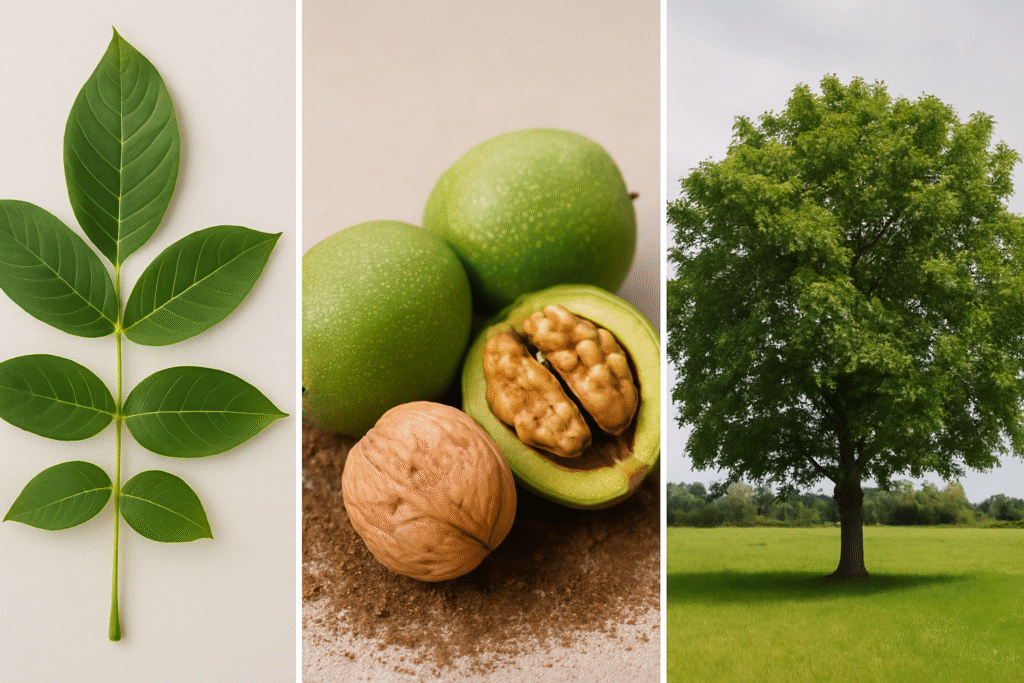
🌰 Nut: Encased in a green husk, turning brown as it matures. Inside: hard shell with brain-shaped kernel.
🌿 Leaves: Large, pinnate with 5–9 leaflets, aromatic when crushed.
🌳 Tree: Tall deciduous tree, up to 25–30 m, with broad crown.
When to Harvest

Best time: Early autumn (September–October).
Collect nuts once the green husks split and fall to the ground.
Dry for several days before cracking open to improve flavor and storage.
Where to Find Them
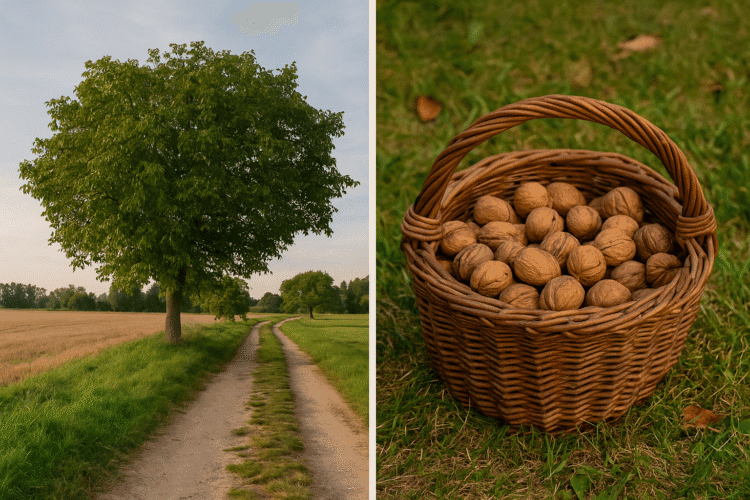
Grown in gardens, orchards, and countryside lanes.Prefer sunny, fertile soils.Often found near old farms and estates.
Health Benefits
High in omega-3 fatty acids (heart health, brain function).
Rich in antioxidants & polyphenols (immune support).
Contain protein, fiber, magnesium & phosphorus.
Traditionally seen as “food for the brain” because of their shape and nutrient profile.
Recipes
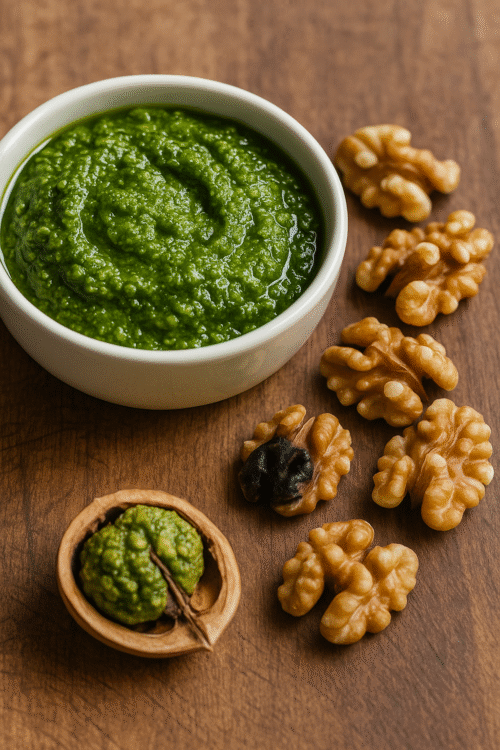
Walnut Pesto
Creamy spread with herbs
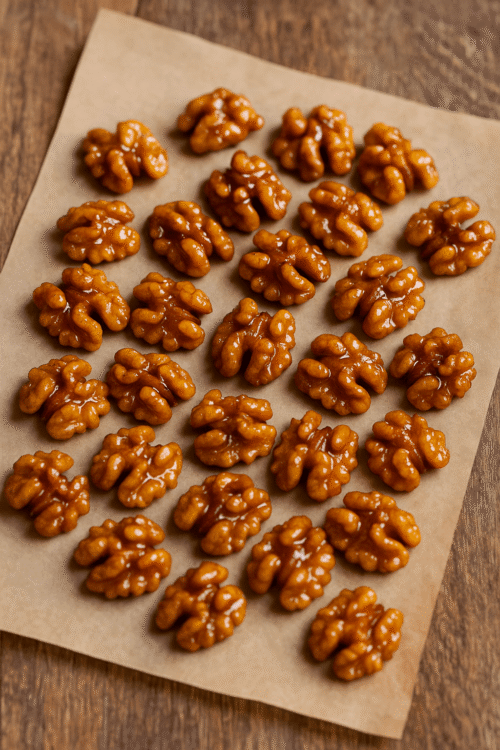
Honey-Glazed Walnuts
perfect snack
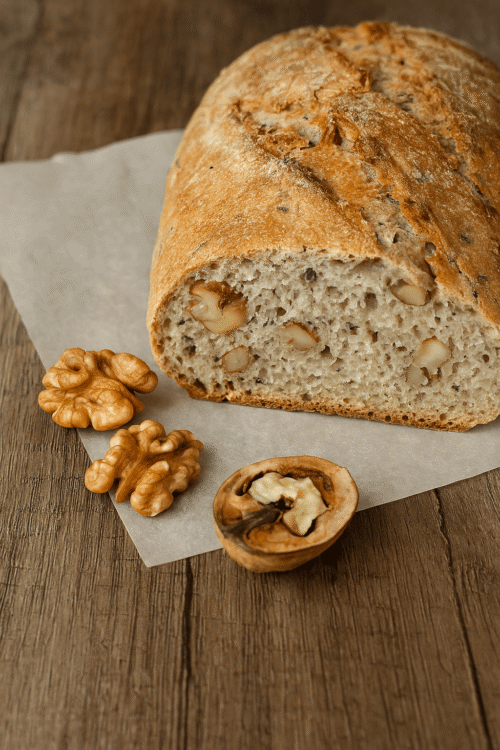
Walnut & Wild Herb Bread
rustic baking
Storage Tips
Fresh ❄️
use within 2–3 weeks, keep cool & dry.
Shelled 🏺
store in airtight jar in fridge (up to 3 months).
Frozen 🥶
shelled kernels can be frozen up to 1 year.
Folklore & Symbolism
In folklore, walnuts were seen as nuts of wisdom and fertility.
In Europe, walnuts were eaten to boost memory and intelligence.
Associated with fertility rites at weddings.
In some traditions, they were believed to ward off evil spirits.