

Sweet Woodruff (Galium odoratum)

sweet woodruff

Spring Leaves, Winter Roots & Traditional Uses

Season

Spring & early summer: fresh leaves and flowers. Late autumn & winter: roots and rhizomes, plus dried herb from earlier harvests

Habitat

Shady woodlands, damp forest floors, and under deciduous trees

Edibility

Edible leaves and roots – aromatic, used in drinks, desserts, and herbal remedies

Introduction

Sweet Woodruff, with its whorls of star-shaped leaves and soft white flowers, is often celebrated as a spring woodland herb. In May and June it carpets the forest floor in fresh green, perfect for fragrant syrups and the famous May wine.

But below the surface, this plant lives a second life. During late autumn and winter, its energy retreats into the roots and rhizomes, resting quietly in the soil. For winter foragers, Sweet Woodruff becomes a symbol of stored spring light: roots that can be dug in the cold months, and dried leaves from earlier in the year that bring a whisper of spring into December teas and tonics.

Identification

Woodruff

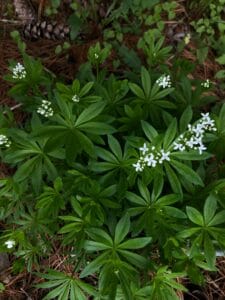
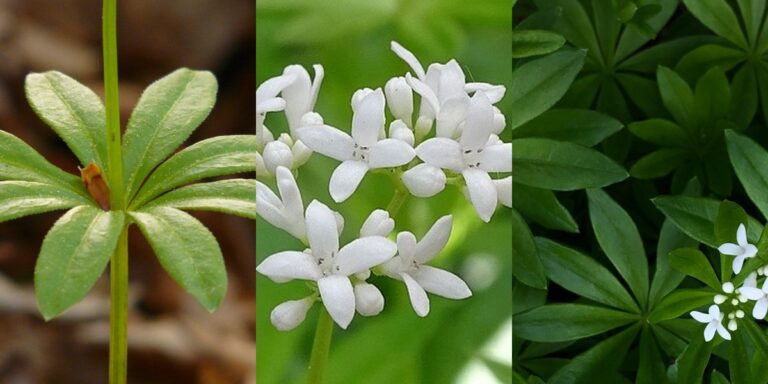
🌿 Leaves: Bright green, narrow, arranged in whorls of 6–8 around the stem, smooth and soft to the touch.
🌸 Flowers: Tiny, white, four-petaled stars appearing in May–June.
🪴 Stem: Square, slender, creeping and forming mats under trees.
🩶 Roots / rhizomes: Thin, fibrous, spreading horizontally under the soil and sending up new shoots.
Scent: When dried, leaves and roots develop a sweet hay-like, vanilla-almond aroma (due to coumarin).

🔎 Look-alike: Don’t confuse with Cleavers (Galium aparine) – that one is sticky, rough, and lacks the sweet scent.

When to Harvest

Spring & early summer (above ground):

  • Harvest leaves and flowering tops just before or during bloom for maximum aroma.
  • Ideal for drying, syrups, wines, and dessert infusions.

Late autumn to mid-winter (below ground):

  • Carefully dig small portions of roots & rhizomes from established patches.
  • Use fresh in decoctions, bitters, or to strengthen syrups and honey.

Always dry the herb slightly before using in larger amounts — this allows the aroma to fully develop.

sweet woodruff with flowers

Where to Find Them

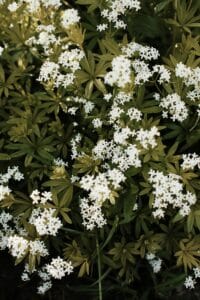
Sweet Woodruff prefers cool, moist shade beneath beech, oak, or hazel in old woodlands. In spring, it forms lush, bright-green carpets; in winter, only a few withered stems may show above ground, while the roots rest below.
Health Benefits

🌸 Contains coumarin, traditionally used for its calming and mildly sedative qualities.
💚 Used as a gentle spring tonic to support liver, blood, and digestion.
😴 Often included in sleep pillows, bedtime teas, and relaxing blends.
🌿 Light diuretic and cleansing, especially in traditional spring detox rituals.

⚠️ Because of coumarin, avoid very large or frequent doses, especially if you have liver issues or take blood-thinning medication. Use Sweet Woodruff as a gentle, occasional ally, not a daily high-dose herb.

Recipes

maiwein

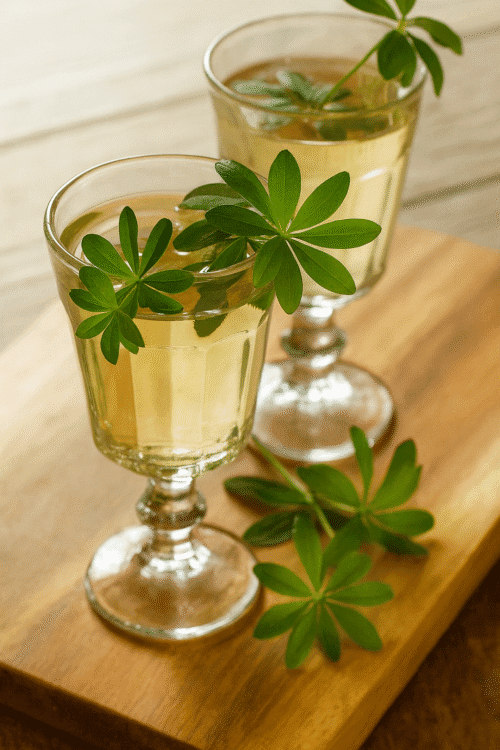
Sweet Woodruff May Wine

Delicate spring tradition: young woodruff infused in white wine (or grape juice) for celebrations and May rituals.
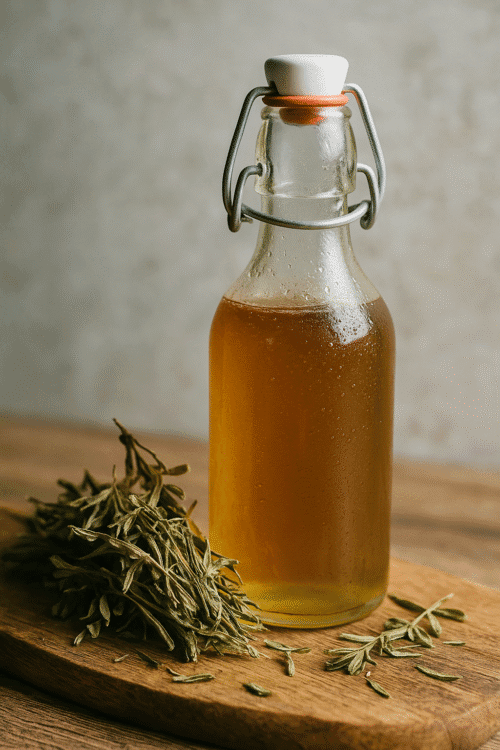
Fragrant sweet woodruff syrup in a glass jar with fresh sprigs on a rustic wooden table

Sweet Woodruff Syrup

Fragrant syrup made from dried or briefly wilted herb – perfect for desserts, lemonades, and winter drinks.
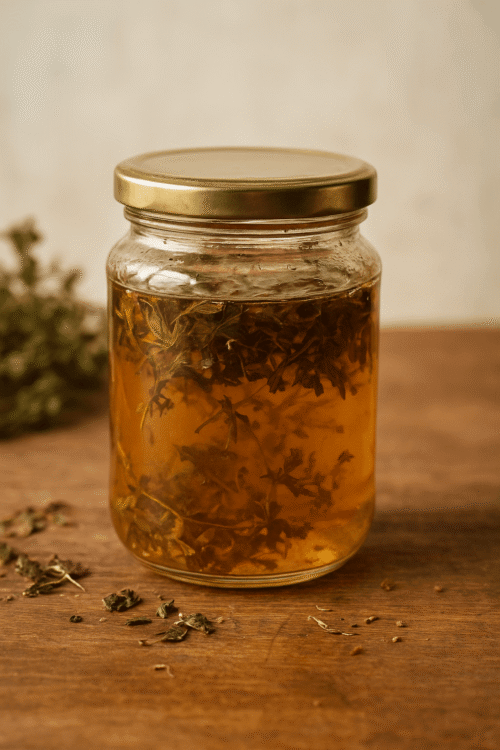
sweet woodruff infused honey

Woodruff Infused Honey

Dried leaves and a few small root pieces slowly infused in honey – ideal for bedtime teas, warm milk, or on toast on dark December mornings.

Storage Tips

Fresh leaves ❄️

Use the same day or keep wrapped in a damp cloth in the fridge (1–2 days).

  • Hang in small bundles or spread in a thin layer to dry.

  • Store in a dark glass jar away from light and heat.

  • Gently brush off soil, slice if thicker, and dry on a rack or in a warm, airy place.

  • Store with dried leaves for winter blends.

  • Syrups and honeys: several months in a cool, dark place.

  • Wine and liqueurs: best within a year for full aroma.

Folklore & Symbolism

  • In European folklore, Sweet Woodruff was called the “Master of the Woods”, believed to protect, purify, and invite blessings.
  • It was woven into May Day garlands, bridal crowns, and church decorations, symbolising love, humility, and renewal.
  • Dried sprigs were placed in pillows and linen chests for sweet dreams and to ward off insects.
  • In winter, the hidden roots were seen as sleeping light — a reminder that spring will return, even in the darkest months.
Share the Post:
Scroll to Top