
Nutrition, Foraging & Traditional Uses
Season
All year round – best in winter and early spring
Habitat
Pine forests, sandy soils, heaths, and dunes
Edibility
Edible needles and young tips – used for teas, syrups, and infusions
Introduction
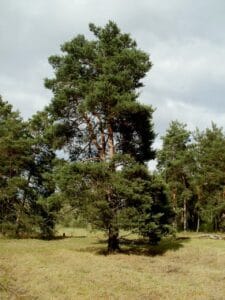
The Scots Pine is one of the most iconic evergreen trees of Northern Europe. Its fragrant needles and reddish bark bring life to even the coldest winter landscapes. Long before modern medicine, pine was cherished for its cleansing scent and healing properties — a true forest ally for the lungs, skin, and spirit.
The young needles are rich in vitamin C and antioxidants, making them a refreshing wild ingredient for teas, syrups, and winter tonics.
Identification
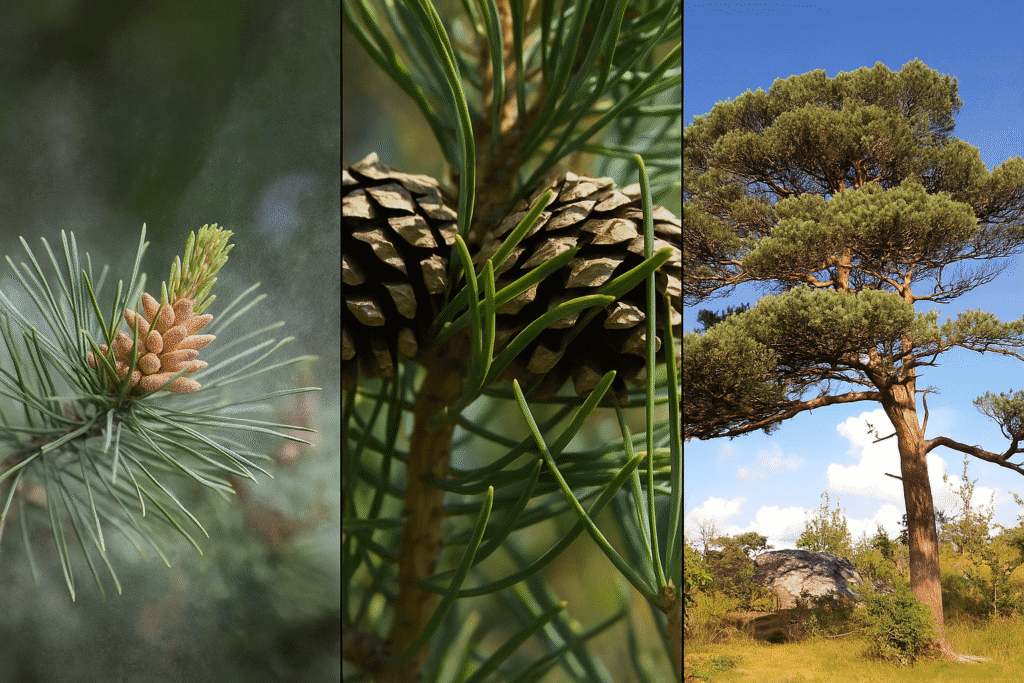
🌲 Needles: Long, paired (2 per bundle), slightly twisted, and bright green.
🟤 Bark: Reddish-orange on the upper trunk, scaly grey below.
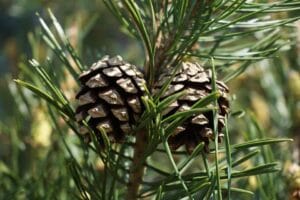
🌿 Cones: Small, oval, ripening from green to brown; usually paired.
🌳 Shape: Tall, airy crown with slender branches and upright growth.
🔍 Scent: Fresh, resinous, and citrus-like when crushed — unmistakably pine.
(Note: Do not confuse with Yew – its needles are shorter, darker, and highly toxic.)
When to Harvest
Best time: Winter to early spring (when oils are strongest).
Pick young, healthy needles — bright green, not brown or dry.
For syrup or infusion, gather fresh shoots before they harden.
Where to Find Them
Scots Pines grow widely across northern Europe, often in open woodlands, heathlands, and sandy soils. Their resilience makes them easy to find year-round — a gift of evergreen energy even in the darkest months.
Health Benefits
- Excellent natural source of vitamin C and antioxidants.
- Supports respiratory health — eases coughs, congestion, and colds.
- Acts as a mood-lifting herb, traditionally used to dispel winter fatigue.
- Externally used in salves and baths to soothe muscles and skin.
Recipes
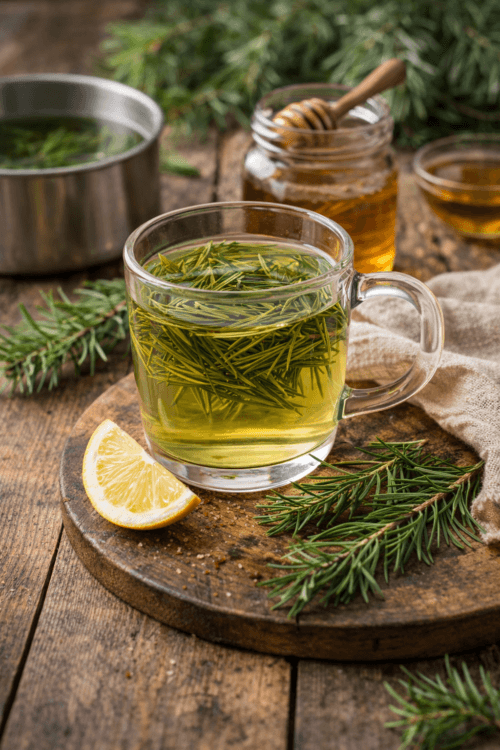
Scots Pine Needle Tea
bright, citrus-fresh infusion full of vitamin C.
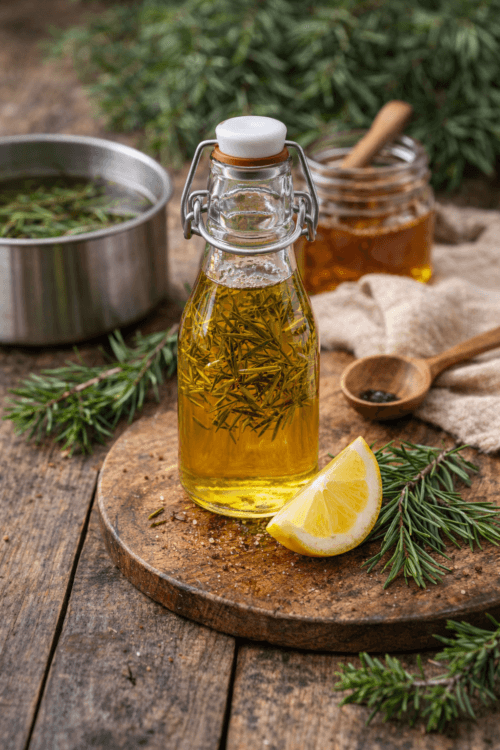
Pine Needle Honey Syrup
sweet forest remedy for sore throats.
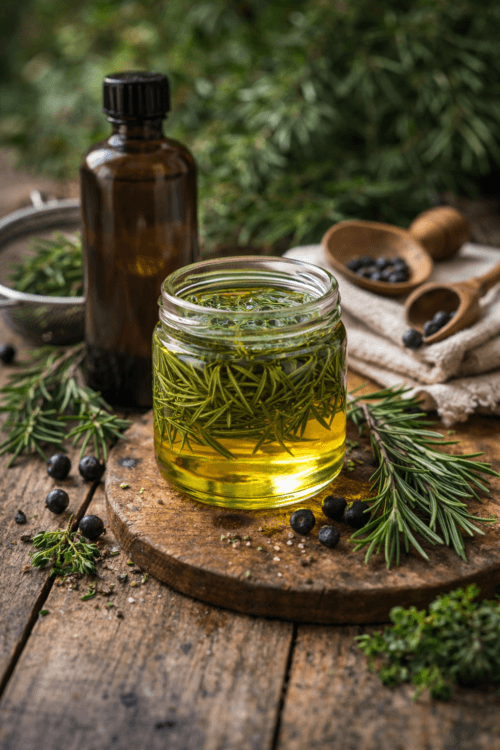
Pine-Infused Oil
warming massage or chest rub.
Storage Tips
Fresh ❄️
Keep stems in damp cloth or vase of water; use within 2 days.
Dried 🏺
Hang roots and leaves in bundles in a dark, airy space; store airtight.
Infused 💜
Store liqueurs and syrups in dark glass bottles.
Candied 🍬
Preserves for months in a cool, dry jar.
Folklore & Symbolism
- In folklore, Angelica was seen as a divine gift, its name derived from the Archangel Michael.
- It was burned as incense to ward off disease and used in protective charms during plague years.
- Symbolically, it represents purity, healing, and divine guidance — a bridge between the earthly and the spiritual.
- In moon rituals, Angelica corresponds with light and renewal, bringing courage and protection to the heart.