
November brings quieter landscapes, fresh pine needles and late-autumn mushrooms. Explore ground ivy, Scots pine, wood blewits and the seasonal uses of angelica, with practical identification tips and ideas for your kitchen and homemade preparations.
This guide focuses on the Netherlands and nearby regions with a similar climate. Harvest times vary with local conditions.
Evergreen needles, fresh herbs and late-autumn mushrooms to explore as winter approaches.
Scots pine needles, ground ivy and wood blewits, with garden angelica roots where suitable.
Woodland edges, leaf litter and gardens where gathering or digging is permitted.
Gather sparingly, protect growing plants and leave plenty of habitat for wildlife.
Explore these four late-autumn finds, from aromatic evergreen needles to woodland mushrooms. Open each guide for detailed identification, possible lookalikes and important harvesting and preparation advice.
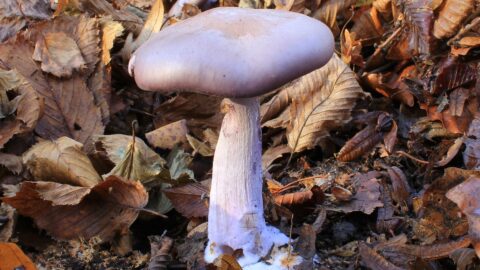
Lepista nuda
Lilac to violet-brown caps grow above pale lilac stems, with closely spaced gills underneath.
Often found among leaf litter in autumn. Colours fade with age, so colour alone cannot confirm identification.
Safety: Poisonous webcaps can resemble wood blewits. Check the complete guide and have finds confirmed by an experienced mushroom identifier while learning. Eat only confidently identified, healthy specimens and cook thoroughly; never eat raw.
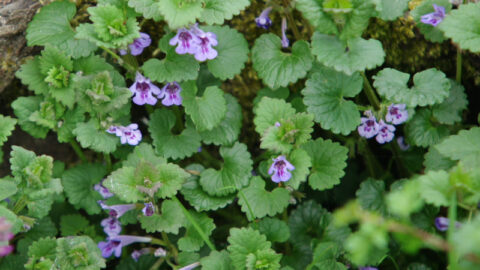
Glechoma hederacea
Creeping stems carry opposite, rounded to kidney-shaped leaves with gently scalloped edges.
Leaves have an aromatic scent when rubbed. Fresh growth may remain available through mild autumn weather, especially in sheltered places.
Safety: Confirm identification using several features, rather than scent alone. Ground ivy is different from common ivy, which is not edible. Gather clean, healthy leaves from unsprayed locations and use small amounts for their strong flavour.
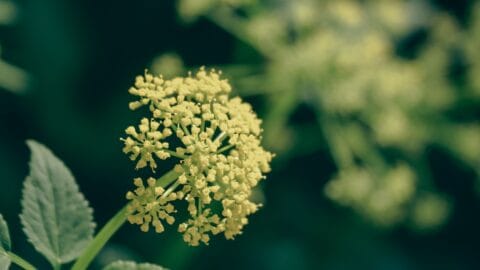
Angelica archangelica
Large, divided leaves have broad, toothed leaflets. Established plants develop stout stems and rounded flowerheads during the growing season.
In November, focus on known garden plants and suitable root harvests; flowering stems are a seasonal feature, not a winter one.
Safety: Use only confidently identified garden angelica. Poisonous members of the carrot family can look similar, especially when foliage dies back. Never identify roots alone. Wear gloves: sap on skin can cause reactions when exposed to sunlight.
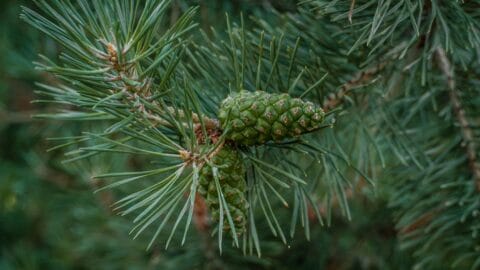
Pinus sylvestris
Blue-green, slightly twisted needles grow in pairs, each pair joined at the base.
Mature trees often have orange-red, flaky bark higher on the trunk. Healthy needles remain available through autumn and winter.
Safety: Confirm the species before gathering; never substitute an unidentified evergreen. Poisonous yew has flat needles growing singly. Harvest a few healthy needles from clean, unsprayed trees, leaving buds and growing tips intact. Follow the guide’s preparation advice.
Bring late-autumn finds indoors with a comforting mushroom meal, an aromatic herbal tea and a forest-scented oil for external use. These simple recipes and preparations offer different ways to enjoy the season.
A few simple precautions will help you forage safely and responsibly.
Confirm each find using several identifying features. Have unfamiliar mushrooms checked by an experienced identifier.
Avoid roadsides, sprayed areas and polluted ground.
Take only what you need and leave plenty for wildlife.
Follow each guide’s preparation advice. Cook wood blewits thoroughly and use pine-infused oil externally only.
Every wild plant has its own identification features, edible uses, lookalikes and preparation advice. Visit the complete plant guides before harvesting something unfamiliar.