Ingredients
Equipment
Method
- Wearing gloves or using tongs, check the nettles and remove tough stems and damaged leaves. Weigh out 100 g of prepared leaves and tender tips, then wash thoroughly.
- Bring a saucepan of water to the boil. Add the nettles, push them under the water with tongs and cook for 2 minutes.
- Drain and rinse under cold running water until cool. Squeeze out as much water as possible, then roughly chop the nettles.
- Put the walnuts and one garlic clove in a food processor. Pulse until roughly chopped. Add the cooked nettles, grated Parmesan and 1 tablespoon of lemon juice.
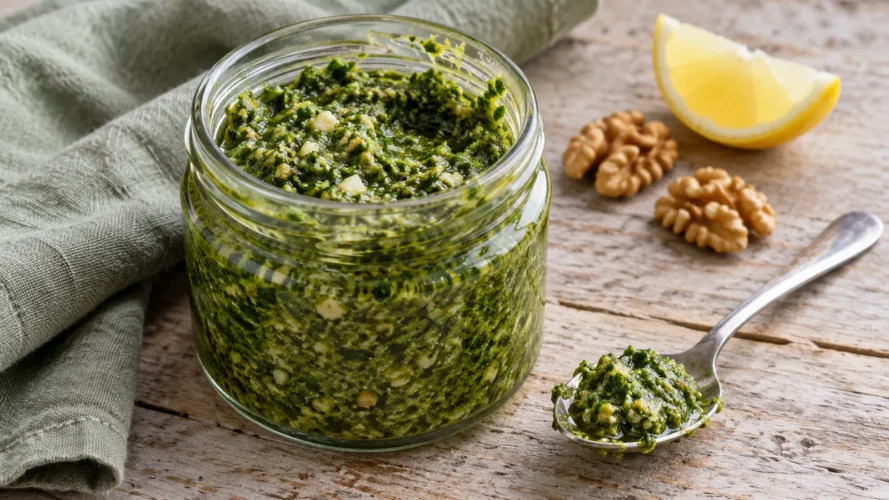
- Add about three-quarters of the olive oil and pulse to combine. Scrape down the sides as needed. Gradually add the remaining oil until you have a spoonable pesto with a slightly coarse texture.
- Taste and add black pepper, a little more lemon juice or the second garlic clove if wanted. Pulse again briefly. Add salt only if needed, allowing for the saltiness of the Parmesan.
- Use immediately or transfer to a clean lidded container and refrigerate promptly. Label with the preparation date and use within 4 days. Freeze small portions promptly if you want to keep it longer.
Notes
Nettles: Use young, tender leaves and tips from confidently identified stinging nettles. The weight is measured before cooking, after removing tough stems. Do not blend raw nettles directly into the pesto.
Texture: Squeeze the cooked nettles well to avoid watery pesto. A food processor gives a rustic texture; a blender may need more scraping down. Follow your appliance instructions.
Nut alternatives: Replace the walnuts with the same weight of pine nuts or shelled sunflower seeds. For a nut-free version, use sunflower seeds and check all ingredient labels for cross-contact warnings.
Vegetarian option: Traditional Parmesan is made with animal rennet. Use a vegetarian hard cheese if required.
Vegan option: Omit the Parmesan and start with 2 tablespoons of nutritional yeast, adding more to taste. Adjust the oil and seasoning as needed.
Storage: Keep refrigerated at 4°C or below and use within 4 days. Use a clean spoon each time. A layer of oil does not extend the safe storage time, and the lemon juice in this recipe does not make the pesto shelf-stable. Do not store at room temperature or home-can this recipe.
Freezing: Freeze in small portions in freezer-safe containers or an ice cube tray. Once frozen, transfer cubes to a sealed freezer bag and label. Thaw only what you need in the refrigerator and use promptly.
Yield: Approximately 250–300 g, depending on how thoroughly the nettles are squeezed and how much oil you use.
Allergens: Contains milk and walnuts. Alternative nuts or seeds change the allergen profile.