Ingredients
Equipment
Method
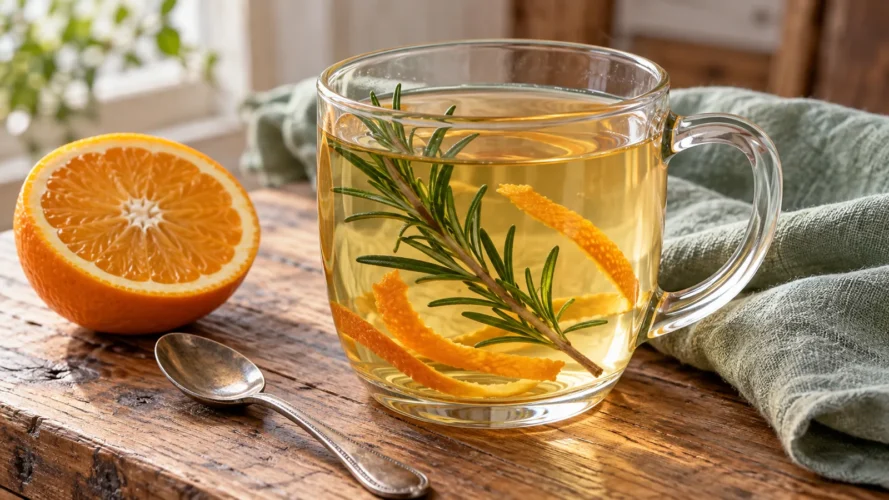
- Wash the orange or lemon thoroughly. Peel 2–3 thin strips, avoiding as much of the bitter white pith as possible. Rinse the rosemary and check it carefully.
- Put the rosemary and citrus peel into a heatproof mug or small teapot.
- Bring fresh water to a rolling boil. Immediately pour 250 ml over the rosemary and peel, then cover with a lid or small saucer.
- Leave to infuse for 10 minutes, then strain out the rosemary and citrus peel.
- Allow to cool to a comfortable drinking temperature. Taste and add the optional honey if desired.
Notes
Rosemary flavour: Sprigs vary in leaf density and strength. Start with one small sprig. If the finished tea is too strong, dilute it with a little hot water. For the next cup, use less rosemary rather than shortening the infusion time.
Dried rosemary alternative: Replace the fresh sprig with ½ level tsp dried culinary rosemary leaves. Strain carefully before serving and follow any brewing instructions on the packaging.
Citrus peel: Use fruit whose peel is suitable for culinary use. Check the label for any instructions about peel treatments and wash the fruit thoroughly. Thin coloured peel gives fragrance; excess white pith can make the drink bitter.
Orange or lemon: Orange gives a softer citrus aroma; lemon gives a sharper note. You can combine them while keeping the total amount at 2–3 strips.
Ginger variation: Add 1–2 thin slices of fresh ginger with the rosemary and citrus peel before pouring over the boiling water.
Caffeine: Rosemary, citrus peel and honey contain no caffeine. This changes if you add black or green tea.
Honey: Optional. Do not give honey to children under 12 months. Use a little maple syrup instead if you prefer a vegan sweetener.
Preparation: Use freshly boiling water rather than merely warm water. Do not substitute rosemary essential oil or concentrated extracts for culinary rosemary.
Serving and storage: Best freshly brewed. If saving some for later, strain, cool promptly and refrigerate in a covered container within 2 hours. Use within 24 hours as a conservative handling guideline.
Allergies: Avoid ingredients to which you are allergic.