
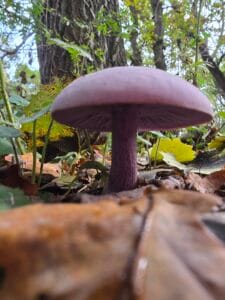
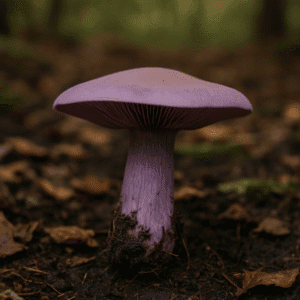
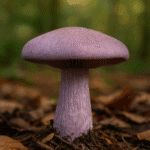
Wood Blewit (Lepista nuda)

Wood Blewit

Nutrition, Foraging & Traditional Uses

Season

Late autumn – early winter

Habitat

Woodlands, leaf litter, compost heaps, grassy clearings

Edibility

Edible when cooked (must be fully cooked — never raw)

Introduction

The wood blewit is a striking lilac-purple mushroom often found in chilly late-autumn woods when most other fungi have disappeared. Its pastel hues fade with age, but its distinctive color and pleasant floral scent make it a favorite among foragers. When properly identified and cooked, it’s a delicious and fragrant addition to seasonal dishes.

Identification

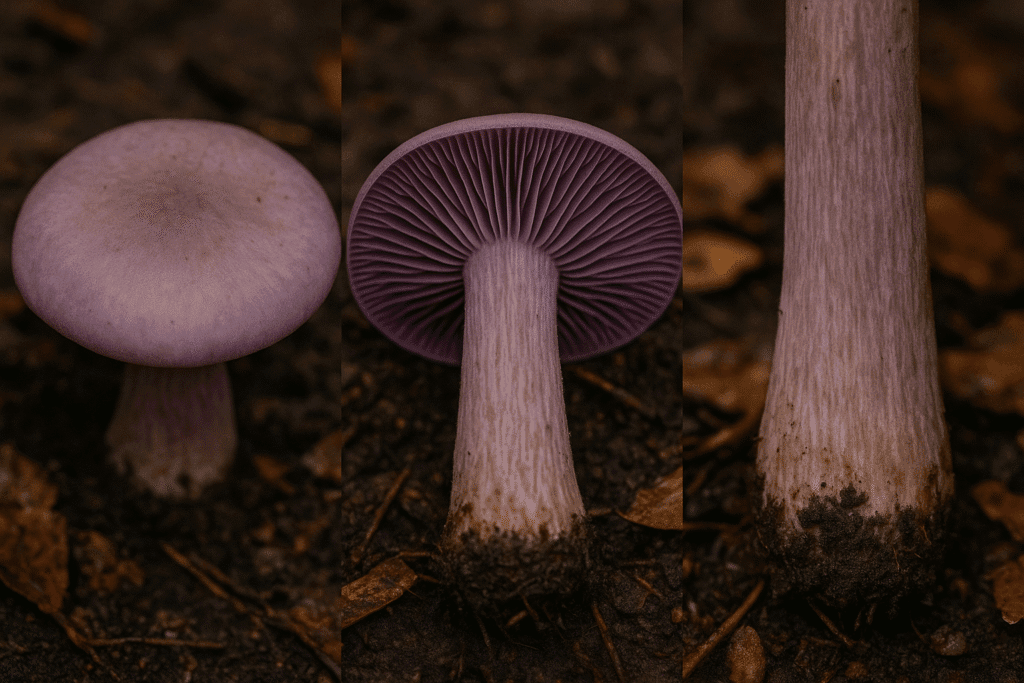
🍄 Cap: 5–12 cm wide, lilac to mauve when young, fading to tan; smooth and slightly sticky.
💜 Gills: Crowded, pale lilac turning buff with age.
🟣 Stem: Cylindrical, fibrous, lilac-colored, sometimes with a white base.
Flesh: Pale lilac with a subtle fruity scent.
🔍 Spore print: Pale pinkish buff.

wood blewit

When to Harvest

  • Best time: Late October – December
  • Pick firm, fresh specimens before frost damage.
  • Avoid older mushrooms that appear brown or emit an unpleasant odor.
  • Always cook thoroughly to break down natural compounds.

Where to Find Them

Wood blewits thrive in damp leaf litter, especially under beech, oak, and pine trees. They often reappear year after year in the same location. After autumn rains, look for their soft lilac glow beneath fallen leaves or near compost heaps rich in organic matter.
Health Benefits

  • Rich in protein, fiber, and minerals like copper and potassium.

  • Contains antioxidants that support the immune system.

  • In folk medicine, used as a warming autumn tonic to strengthen digestion.

Recipes

crispy golden puffball schnitzel on a rustic plate

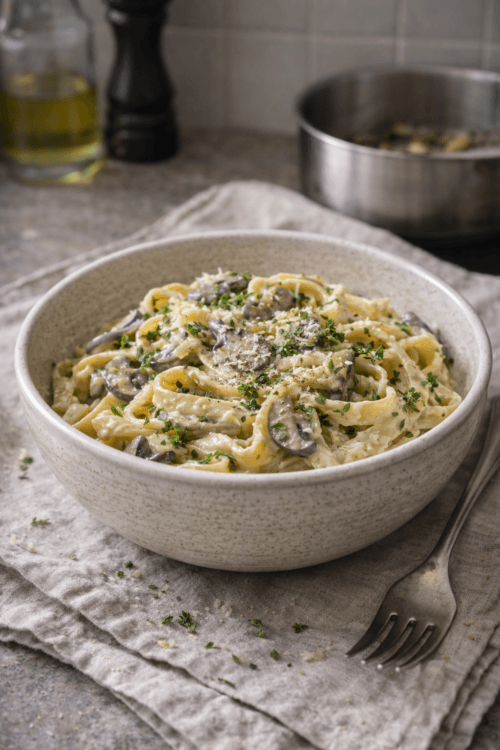
Wood Blewit Cream Pasta

silky mushroom sauce with herbs and cream.
giant puffball soup

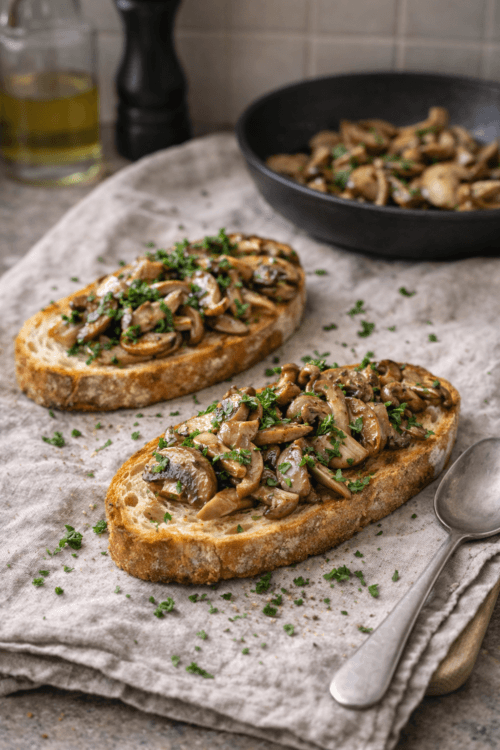
Blewit Toasts with Garlic Butter

perfect warm appetizer.
crispy stuffed puffball mushroom cubes on a rustic plate

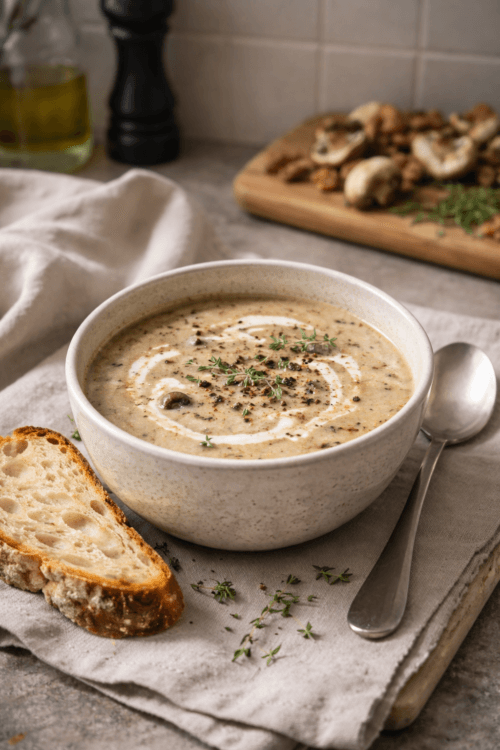
Wild Mushroom Soup

blend of blewits, porcini, and thyme.

Storage Tips

Fresh ❄️

2–3 days in fridge, paper bag (not plastic).

Slice and air-dry or use dehydrator; store in airtight jar.

Lightly sauté before freezing for up to 6 months.

Folklore & Symbolism

  • In European folklore, their violet hue symbolized intuition, mystery, and transformation.

  • Associated with the waning moon — the time for reflection and quiet insight.

  • Said to appear where fairies danced at night, leaving their soft lavender glow in the forest.

Share the Post:
Scroll to Top