Ingredients
Equipment
Method
- Confidently identify the sweet woodruff before preparation. Remove roots and damaged material, rinse and shake off excess water. Weigh out 2 g fresh herb using precision scales.
- Spread the measured herb on a clean tray and allow it to wilt overnight in a cool, well-ventilated place. Do not add extra herb to replace the weight lost during wilting. This preparation time is not included in the recipe time.
- Pour the chilled wine into a clean, wide-necked jug. Tie the wilted sprigs together with food-safe string and suspend the leafy parts in the wine, keeping the cut stem ends above the liquid.
- Cover as well as the arrangement allows and refrigerate for 1 hour. Remove the entire herb bundle, then strain the wine into a clean carafe.
- Taste the strained wine. If desired, stir in the caster sugar until dissolved.
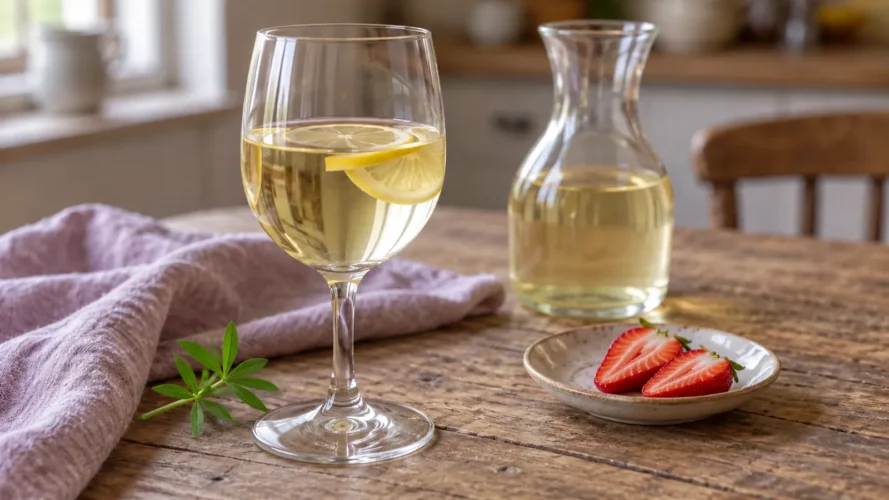
- Divide between six small glasses. Add the optional lemon slices or strawberry halves just before serving. Do not add fresh woodruff sprigs to the finished glasses.
Notes
Plant quantity: Use 2 g fresh sweet woodruff per 750 ml wine, weighed before wilting. Sprig sizes vary considerably, so counting stems is not a reliable substitute for weighing.
Fresh herb only: Do not substitute 2 g dried sweet woodruff. Drying changes the weight and concentration of the plant material. Roots are not used.
Coumarin: Sweet woodruff naturally contains coumarin, and the amount varies. This measured recipe does not establish the exact coumarin content of the drink. Enjoy occasionally rather than as a daily herbal preparation.
Infusion time: Refrigerate for 1 hour, then remove the herb completely. Do not extend the infusion or add extra herb to intensify a faint aroma.
Wine: Use a dry white wine you enjoy drinking. This is an infused wine, not a fermented homemade wine, and the preparation does not remove its alcohol.
Sweetening: Sugar is optional. Add it only after removing the herb so you can judge the finished balance. An alcohol-free grape juice version will usually need no extra sweetener.
Alcohol-free variation: Replace the wine with 750 ml pasteurised white grape juice. Follow the same herb quantity, refrigerated infusion and straining steps. The result will be sweeter and will not taste like dry wine.
Sparkling variation: After removing and straining the herb, add 375 ml chilled sparkling wine or sparkling water just before serving. Do not increase the woodruff quantity. This makes approximately nine small glasses.
Serving: Strain before serving and keep the woodruff out of individual glasses. Optional lemon and strawberries are added only after the infusion.
Storage: Keep the strained drink covered in the refrigerator and serve the same day for the best flavour. Prepare only the amount you plan to use.
Allergens: Wine commonly contains sulphites. Check the wine or juice label for declared allergens.
Timing: The stated total excludes overnight wilting and chilling the wine beforehand.