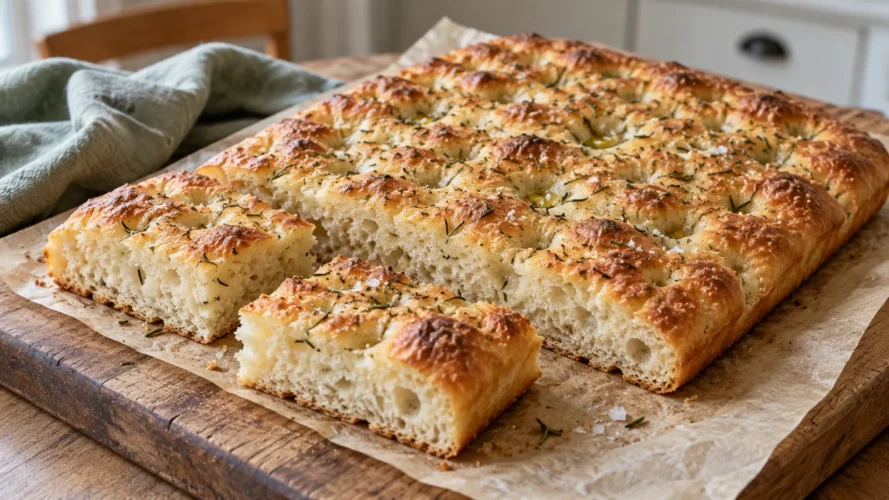
Ingredients
Equipment
Method
- Mix the flour, instant yeast and fine salt in a large bowl. Add the lukewarm water and 30 ml olive oil, then stir until no dry flour remains.
- Knead for approximately 8–10 minutes until the dough becomes smoother and elastic. It will remain slightly tacky. Use a dough scraper or lightly oiled hands rather than adding lots of extra flour.
- Add the grated garlic and 1 tbsp finely chopped rosemary. Knead briefly until evenly distributed.
- Shape into a ball, cover the bowl and leave in a comfortably warm, draught-free place for approximately 60 minutes, or until roughly doubled in size. Allow longer in a cool kitchen.
- Grease a 20 × 30 cm metal baking tin with 15 ml olive oil. Transfer the dough to the tin and gently stretch it towards the corners. If it springs back, cover and leave for 10 minutes before stretching again.
- Cover and leave to rise for approximately 30 minutes, or until visibly puffy. Meanwhile, preheat the oven to 220°C conventional or 200°C fan.
- Drizzle the surface with the remaining 15 ml olive oil. Press your fingertips deeply into the dough to make dimples, without tearing through it. Scatter over 1 tsp chopped rosemary and the optional flaky salt.
- Bake on the middle shelf for 20–25 minutes, until the top is golden and the underside is lightly browned and firm. If needed, bake a few minutes longer. Loosely cover with foil if the top colours before the bread is baked through.
- Leave in the tin for 5 minutes, then carefully transfer to a wire rack. Cool for a further 10 minutes before cutting into eight pieces.
Notes
Flour: Strong white bread flour gives the most consistent starting point for this recipe. Plain flour can produce a softer dough with a different structure. Wholemeal flour is not a direct replacement at the same water quantity.
Dough texture: The dough should feel soft and slightly tacky rather than dry or stiff. Flour absorption varies. If dry flour remains after mixing, add water 1 tsp at a time; avoid making large adjustments immediately.
Yeast: This recipe uses instant yeast, which can be mixed into the flour. If using another type, follow the packet instructions for quantity and activation.
Rising times: The stated times are estimates. Look for roughly doubled dough after the first rise and visibly puffy dough after the second. A cool room or cooler water will lengthen the process.
Garlic: Finely grate or crush the garlic and work it into the dough. Avoid scattering raw minced garlic over the surface, where it can burn during baking.
Rosemary: Remove the woody stems and chop the leaves finely. Toss the topping rosemary through the surface oil as you dimple the dough to help prevent scorching.
Tin size: Use a tin close to 20 × 30 cm. A larger tin makes thinner bread that may bake faster; a smaller tin makes thicker bread that needs longer.
Cooling: Transfer to a rack after the first 5 minutes so the underside does not become soggy. Allow at least another 10 minutes before slicing.
Storage: Best on the day it is baked. Once completely cool, store covered at room temperature for up to 2 days. Freeze individual pieces promptly for longer storage.
Reheating: Warm in an oven at 180°C conventional or 160°C fan for approximately 5–10 minutes, depending on the size of the pieces. Avoid overheating, which dries the bread.
Allergens: Contains wheat and gluten.