A remarkably large, rounded fungus that grows directly on the ground and contains solid white flesh when young.
Giant puffballs can grow from the size of a grapefruit to larger than a football. Young specimens are edible after confident identification and thorough cooking. Once the interior begins turning yellow, olive or brown, the fungus is no longer suitable for eating.
Late summer to autumn, commonly from August to October
The precise season varies according to location, rainfall and temperature
Meadows, pastures, field edges, grassy verges, parks, gardens, orchards, woodland edges and other undisturbed grassy places
Commonly 10–50 centimetres across, although exceptional specimens can become considerably larger and weigh several kilograms
Only the firm, uniformly white inner flesh of a young and confidently identified specimen, cooked thoroughly before eating
Giant puffballs are fungi rather than plants. The visible white sphere is the temporary fruiting body of a larger fungal organism growing as a network of fine threads called mycelium within the soil.
Unlike familiar cap-and-stem mushrooms, the giant puffball produces its spores inside a rounded, enclosed fruiting body. Its firm white interior gradually changes into a dry mass of microscopic spores as the fungus matures.
Several puffballs may appear together or form part of a broad ring. A productive location may produce new fruiting bodies in later years, although their return is never guaranteed.
Young giant puffballs are valued for their mild flavour and soft, absorbent texture. The flesh readily takes on the flavours of herbs, spices, butter and sauces.
Giant puffballs grow directly from the ground in grassy or lightly wooded habitats.
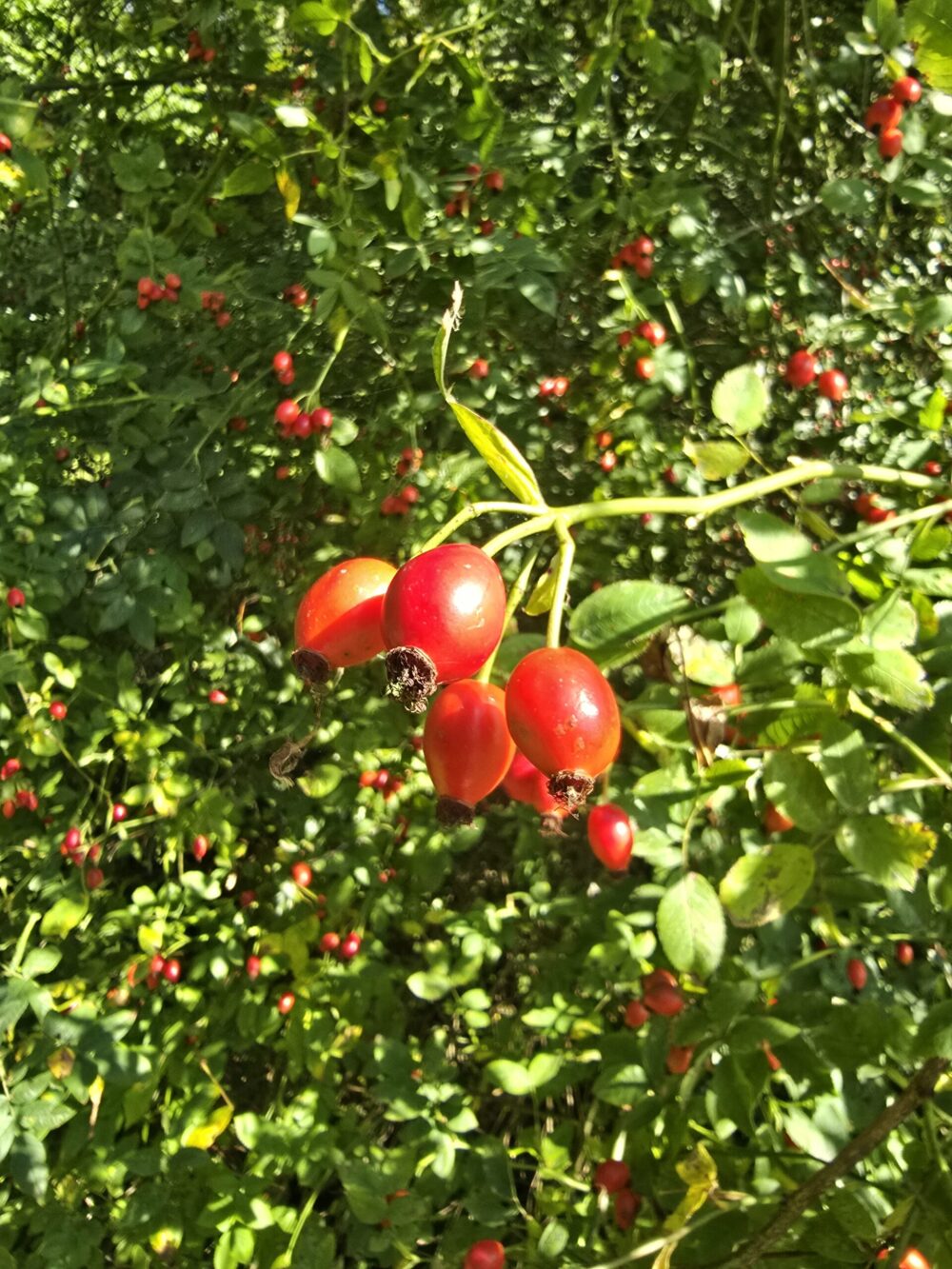
The fruiting body is broadly rounded, oval, flattened or slightly irregular. Young specimens have a white to cream surface that is normally smooth or slightly suede-like.
The base may be slightly narrowed and attached to the ground by root-like fungal strands. There is no separate stem, cap, visible gills or pore surface.
Size varies considerably. Young specimens can still be relatively small, so size alone must never be used for identification.
The most important identification check is the interior.
Cut every collected specimen completely in half from top to bottom. A young giant puffball suitable for culinary use must be:
Uniformly white throughout
Solid and continuous inside
Firm but soft, with a texture similar to dense bread or marshmallow
Free from any outline of a cap, stem or gills
Free from layers, cavities or gelatinous areas
Free from discolouration, mould, decay and extensive insect damage
The entire cut surface must be homogeneous. If a developing mushroom structure, layered pattern or hollow area is visible, do not eat the specimen.
As the puffball matures, the interior changes from white to cream, yellow, olive and finally brown. This colour change indicates that spores are developing and the fungus must no longer be eaten.
Old puffballs become dry, papery and filled with brown spores. Do not kick, squeeze or burst them, because concentrated clouds of spores can irritate the respiratory system.
Never identify a puffball from its exterior or from a photograph alone.
Young Amanita mushrooms develop inside a rounded universal veil and can resemble small white puffballs.
This group includes dangerously poisonous and potentially fatal species such as the death cap and destroying angels. Size is not a reliable distinction because young giant puffballs may also be small.
Cut the entire specimen vertically through its centre. Inside an Amanita, you may see:
A folded cap
A central stem
Developing gills
A surrounding sac or layered veil
These structures can initially be faint. Examine the complete cut surface in good light.
A young giant puffball contains only continuous, uniformly white flesh. If any internal mushroom structure, line, cavity or layered pattern is visible, do not eat it.
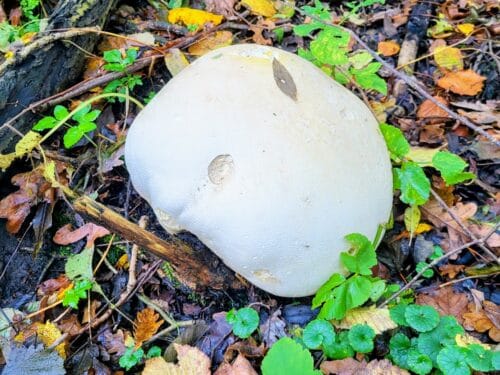
Earthballs are rounded fungi with a thick, tough outer skin. Their surface is often yellowish or brownish and may be cracked, scaly or warted.
When cut open, the interior becomes dark grey, purple-black or almost black. It may also show pale veins or a marbled pattern.
Earthballs are not edible and can cause significant gastrointestinal illness. Never eat a rounded fungus with a dark, marbled or purplish interior.
Stinkhorns begin inside rounded or egg-shaped structures that may be partly buried in soil or leaf litter.
When cut open, they contain distinct layers, gelatinous material and the central structure of the developing stinkhorn. They do not have the continuous white interior of a young giant puffball.
Do not collect a layered or gelatinous fungal egg as a puffball.
Several smaller puffball species also contain white flesh when young. Their surfaces may be pear-shaped, spiny, warted or attached to buried wood.
Some are considered edible at the correct stage, but each species requires separate identification. Do not assume that every rounded white fungus is a giant puffball.
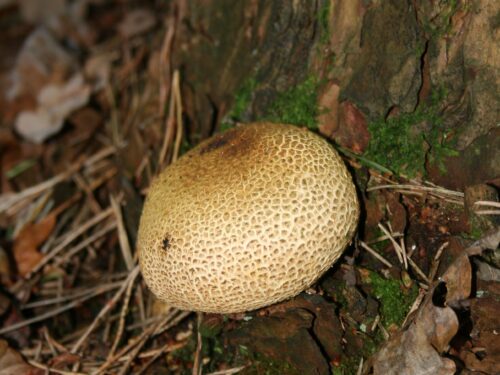
Only the firm, uniformly white flesh of a confidently identified young giant puffball is edible.
Cut every specimen completely in half before preparing it, even when the exterior appears fresh and undamaged.
Discard the entire specimen if the interior shows discolouration, developing mushroom structures, layers, gelatinous material, decay, extensive insect damage or an unusual smell.
The outer skin can become tough and may collect soil or debris. Many cooks remove it before preparing the white flesh.
Do not eat giant puffball raw. Cook it thoroughly until hot throughout.
Young giant puffball flesh can be used in:
Fried or sautéed slices
Breaded schnitzels
Grilled puffball steaks
Curries
Soups and stews
Pasta dishes and risottos
Savoury pies
Dried mushroom pieces or powder
The flesh contains considerable moisture. Cooking slices in a wide, hot pan helps them brown rather than steam.
Fresh puffball deteriorates quickly after harvesting. Refrigerate clean pieces and use them as soon as possible. Suitable flesh can also be cooked and frozen or sliced and dried thoroughly.

Never eat a puffball based only on its rounded white exterior. Young Amanita mushrooms can resemble small puffballs and may contain deadly toxins.
Cut every specimen completely in half from top to bottom. The interior must be solid, uniform and pure white, without a cap, stem, gills, cavity, gelatinous area or layered structure.
Do not eat puffball flesh that has begun turning cream-yellow, yellow, olive, green, brown or powdery. These changes indicate maturation and spore development.
Never eat earthballs. Their tough outer skin and dark or marbled interior distinguish them from the uniformly white interior of a young giant puffball.
Cook giant puffball thoroughly and try only a small portion the first time. Even correctly identified edible fungi can cause digestive discomfort or an individual allergic reaction.
Do not deliberately kick, squeeze or burst mature puffballs. Inhaling concentrated spores can irritate the lungs and, in rare cases, cause inflammatory respiratory illness. Seek medical advice if coughing, breathlessness, fever or chest discomfort develops after significant spore exposure.
Avoid specimens growing beside busy roads, on contaminated ground, near treated lawns or in recently sprayed areas.
Wild fungi should not be identified from an app, photograph or single characteristic. If any doubt remains, leave the specimen where it is or consult an experienced local mushroom identifier.
Harvest only where collecting is permitted and obtain the landowner’s permission where required.
Choose young, healthy fruiting bodies growing away from obvious pollution. Take only what you can identify, prepare and use while fresh.
Cut the puffball cleanly near its base without disturbing the surrounding soil or vegetation.
Leave some healthy specimens to mature naturally and release their spores. Avoid damaging other young fruiting bodies growing nearby.
Do not kick or deliberately burst mature puffballs. This damages the fruiting body and can release spores directly into the breathing zone.
The underground mycelium remains after the visible puffball is removed. Protecting its habitat is more important than collecting every available specimen.

Giant puffballs have traditionally been valued as seasonal food and as unusual products of fields, meadows and woodland edges.
Young white puffballs were traditionally used in:
The mild flesh was sliced, cooked in fat or added to strongly flavoured dishes. Large specimens could provide a considerable amount of food and were sometimes shared between households.
Mature puffballs also had non-culinary uses. Their dry interior and spores were historically associated with tinder, fire carrying and attempts to control minor bleeding.
Puffball material was sometimes placed on wounds in traditional practice. This is not recommended today because old specimens may contain contaminants, microorganisms and large quantities of easily inhaled spores.
These historical applications should be understood as fungal folklore and traditional practice, not as modern medical or first-aid guidance.
Young giant puffball tissue contains a high proportion of water together with protein, carbohydrates, dietary fibre and small amounts of fat.
Like many edible fungi, giant puffballs contain fungal polysaccharides, including forms of beta-glucan. They also contain sterols such as ergosterol, a fungal precursor of vitamin D₂.
Phenolic compounds and other naturally occurring substances have been identified in laboratory extracts. Their composition varies according to maturity, growing conditions, storage and preparation.
Laboratory findings concerning isolated mushroom compounds cannot automatically be applied to ordinary cooked food.
The presence of beta-glucans, phenolic compounds or other substances does not demonstrate that giant puffball can prevent or treat cancer, infections, inflammation or other medical conditions. It should be regarded as a seasonal food rather than a medicine.
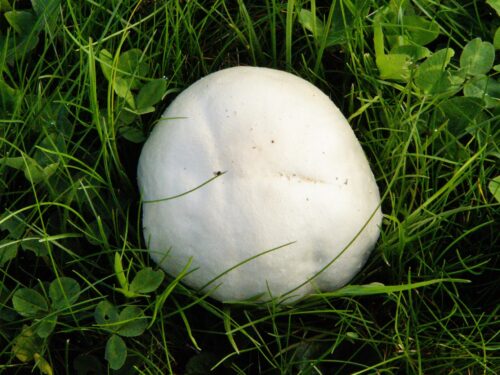
Some specimens grow larger than a football and weigh several kilograms.
Young specimens contain solid white flesh without a cap, stem or gills.
The white interior transforms into a vast mass of spores as it matures.
Large fruiting bodies can appear quickly after suitable rainfall.
Learn how to recognise and explore wild plants, fruits, fungi and trees safely.
A giant puffball does not produce a conventional mushroom cap, stem or external gills.
Its spores develop inside the fruiting body. As the mushroom matures, the solid white interior changes into an olive-brown or brown spore mass.
A large mature specimen can release an extraordinary number of microscopic spores.
The visible puffball is only the temporary fruiting body. The main fungal organism survives as mycelium hidden within the soil.
Despite its impressive size, a giant puffball may develop rapidly and then deteriorate within a relatively short period.