Ingredients
Equipment
Method
- Preheat the oven to 200°C conventional / 180°C fan. Prepare the confidently identified Scots pine needles, removing all woody material. Wash, dry and chop very finely. Measure out 1 teaspoon.
- In a small bowl, mix the chopped pine needles, honey, Dijon mustard, grated garlic and 1 tablespoon of water. Set aside, keeping the glaze separate from the raw chicken.
- Pat the chicken skin dry with kitchen paper; do not wash the chicken. Season with the salt and black pepper.
- Heat the oil in a large ovenproof frying pan over medium heat. Place the thighs skin-side down and cook for 6–8 minutes, until the skin is golden and releases reasonably easily. Work in batches if needed rather than crowding the pan.
- Turn the thighs skin-side up. Transfer the pan to the oven and roast for approximately 20 minutes.
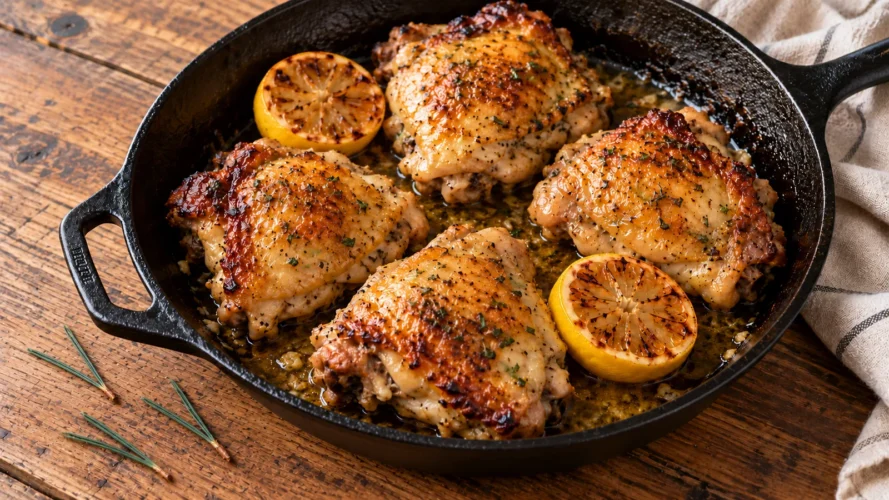
- Carefully remove the pan using oven gloves. Spoon or brush the glaze over the chicken, using all of it. Return to the oven for another 8–12 minutes, until the glaze is lightly browned and each thigh reaches at least 74°C in its thickest part, without the thermometer touching bone. Cook longer if necessary. Loosely cover with foil if the glaze colours too quickly.
- Transfer the cooked chicken to a clean plate and rest for 5 minutes. Leave enough fat in the pan to lightly coat its base, carefully removing any excess.
- While the chicken rests, place the pan over medium heat. Add the lemon halves cut-side down and cook for 2–3 minutes until browned. If the pan contains blackened glaze, use a separate clean frying pan with a little oil instead.
- Serve the chicken with the warm lemon halves. Squeeze over a little juice to taste, taking care as the lemons will be hot.
Notes
Plant identification: Use Scots pine (Pinus sylvestris) only. Do not use unidentified evergreen material or yew. Choose a clean, untreated source where harvesting is permitted.
Needle texture: Use young, soft needles and chop them extremely finely. Discard coarse needles, woody shoots and papery coverings. If your material is tough, do not use it in this glaze.
Chicken: This method is for bone-in, skin-on thighs. Boneless thighs or chicken breasts need different cooking times. Check every piece with a food thermometer rather than relying on colour or timing alone.
Honey glaze: Add near the end of cooking. Honey and garlic can burn during prolonged frying, so keep the initial browning stage free from glaze.
Raw chicken handling: Keep raw chicken and its utensils separate from ready-to-eat ingredients. Once a brush or spoon has touched partially cooked chicken, do not use it for serving without washing it.
Portions: Makes four servings when accompanied by side dishes. Small thighs may make lighter portions.
Storage: Refrigerate leftovers within two hours and use within 48 hours, or freeze promptly in suitable containers. Thaw in the refrigerator and reheat once until the chicken reaches 74°C throughout.
Honey: Do not serve honey-containing food to children under 12 months.
Allergens: Contains mustard. Check the mustard label for any additional allergens.